Okra Twilight
10 ft tall and almost out of gas……

Volunteers VS Planned: Gourds
I prepped a nice deep rich bed for gourds a couple years back and successfully planted it in 2010 and 2011. The yield was decent (birdhouse in 2010, luffa in 2011). Volunteer tommy toes hijacked the bed in 2012, so no gourds were planted (besides I still had a surplus of both types).
Last winter I spilled luffa seeds in a stack of rocks and couldn’t recover them right away. By the time the rocks were moved and used, most of the seeds had been obscured or covered by leaf litter and mulch. Well, they sprouted.
And sprouted.
And grew.
And grew…
And grew…..
The vines along the ground rooted at every leaf node and became uber-zombie-vines, able to absorb nutrients and water at a significantly higher rate vs being on the fence in previous years. So basically I hatched gourd kudzu, which was ok since it choked out 99% of the weeds that would have sprouted in the area they covered.
These vines are finally in decline and I’m getting a glimpse of their production for the first time now. Over the 2nd half of the season, I had harvested smaller gourds when visible (zucchini substitute) but knew more were out of sight/reach below the large leaves.
Understatement.
Sampling of what was underneath:


35 or 40 feet from where the vines sprouted, they escaped and encroached onto the fence and tree on my property line:


Lesson learned (again): Sometimes all the work we do to prep soil and pamper our plants is a waste or even to the plants’ detriment.
As they say, “Nature finds a way”.
Into Fall
Days shorten, nights cool, & the garden shifts towards fall/winter mode.
We will get several nights in the 40s this week, so the remaining summer harvest is not long for the world.
Basically we are down to the 10-11 foot okra, wild tommy-toe tomatoes, mountains of basil and two bamboo towers of “Christmas” limas.
The basil is most at risk, as a few nights in the mid-40s will cause the leaves to spot up a bit (although the flavor is still pretty good).
But the good news is some fall plantings are doing well.
I have several successive plantings of both both rutabaga and purple kohlrabi that seem to be coming along on cue (now that I’m not drowning them).
A small patch of kohlrabi & rutabaga (kohlrabi is the purple stem plant in the front):

An earlier patch of kohlrabi shows the “Sputnik” ball forming mid stem; for scale these aren’t quite ping-pong ball sized yet:


What the heck does one do with this stuff? I don’t know, but I am hoping we’ll find something once the first are ready for harvest. More on Kohlrabi here
What else?
The middle boxwood beds are well on their way now with broccoli, cabbage & fava beans. I have both a shorter maturity mid-sized and a longer “full sized” cabbage variety planted; based on the size of the leaves, “full sized” seems to be a bit of an understatement.

The favas are a new crop for us; I decided to try them for 3 reasons:
1. They should grow all winter here without protection.
2. They are a legume and do a very good job fixing nitrogen from the atmosphere into the soil and can also be chopped / turned under the soil after the harvest as a “green manure”.
3. I have read that fresh favas harvested when small are much sweeter than anything one can find in the produce section or a farmers market.
Favas are also known as “Broad Beans” and look somewhat like limas when processed and cooked. However, they aren’t a bean really at all; they are a “vetch”, which around here is used as a cover crop/soil conditioner and for wildlife habitat improvement.
The Fava wiki is here if you are remotely curious….. and no, I did not realize that they have to be “shelled” twice when I ordered and planted them…..
Bottom line these will be an effective off-season soil conditioner that should carry the bonus of a tasty spring harvest.
Another angle shows the upright growth habit of the favas (I did not want to have to trellis anything over the winter; these grow tight without support.)

What else?
The tiny leek sprouts from early spring have been transplanted twice and a second level of soil was added to the “final” beds several weeks ago. The extra work is worth it with leeks; the “blanched” white stems of these will be much longer than they would otherwise be by a factor of 2x – 3x, ie more harvest in less space. Also, the incremental “hilling effect” of this method avoids much of the grit/dirt issue of leeks that are hilled up in one big dirt-fest as they are maturing. The cooler days/nights have been good for them and for the most part they are fattening up nicely. Once we get a freeze I’ll start harvesting them as needed; they will store well in ground / as planted (and add a little girth too) so we don’t need to go to the trouble of harvesting all at once…
Double-decker bed of leeks:

What else?
That’s it for now. My greens aren’t photogenic enough yet, but you can be sure I have several rows of almost every type coming up right now.
Gardening Underground
Literally
I dug another bed of sweet potatoes Saturday morning so that I could get some garlic planted. When the harvest is “underground” as with crops such as sweet potatoes and garlic, I always worry that I’m early, or late, or even that gophers have cleaned me out (not happened yet but you never know).
In spite of this pre-harvest anxiety, I always enjoy the “dig” when I get to find out what is below, a bounty or not.
This bed had mostly “porto rico” sweet potatoes in it; the Vardaman in a nearby bed were a big success so I hoped these worked out as well.
Uh…. I think it was a success….. some monstrous but ugly cracked tubers emerged.

A couple were almost football sized; I had read that they would grow until frost but would perhaps not be “market pretty” after they passed a certain size. Now I understand lol….
The rain held off long enough for me to rehab the bed with some fresh compost and a little bone meal, so this would be the initial garlic planting weekend of the season after all….
To increase the size of the individual heads of garlic in your garden each year, save largest heads for “seed”, then at planting time only use the largest cloves off. Be careful not to damage the clove skins as this will protect the clove until it breaks dormancy and starts putting out roots.
I generally pick most of the wrapper off of my seed first, usually somewhere I shouldn’t so that the “garlic paper” gets wet and bonds to the surface of whichever steps I forgot to sweep off before the rain came. (Sorry dear.)
At this point I carefully select the best cloves and segregate them for planting. (The central and smaller cloves get to to come in and be peeled and roasted for dinner.)
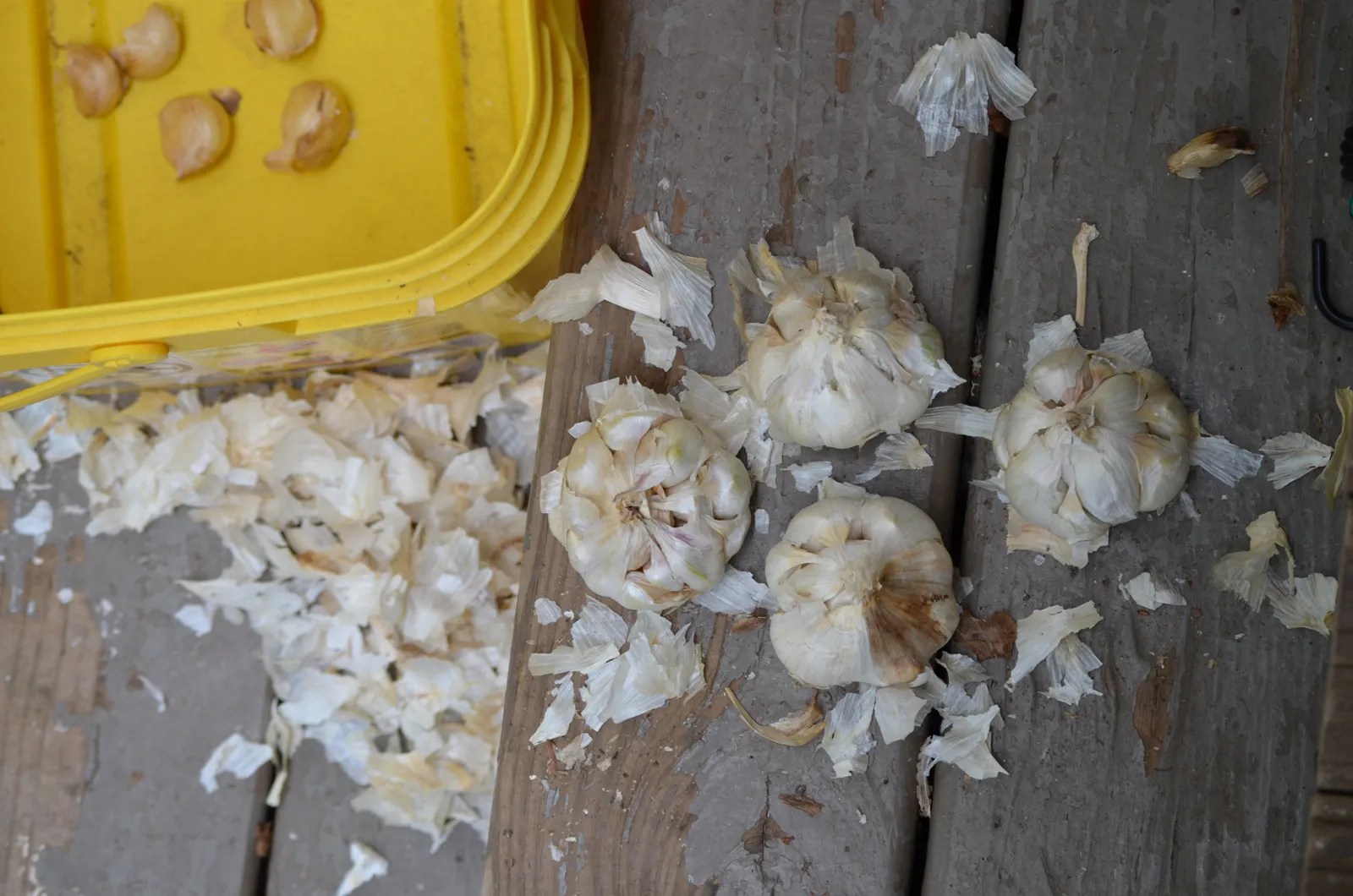
I set my cloves out on a 6″ grid and this year pushed them a little deeper (2″-3″) than last year; hopefully this helps the necks a bit. Last year I planted some too shallow and I believe it contributed to the deterioration of the bulb wrapper at the stem connection near the surface of the soil.
I learned that eyeballing will almost always screw up the grid’s spacing so I actually use a 48″ straight edge ruler to get it right….

So one crop that was underground for over 4 months was uncovered and one that will be underground for 8-9 months replaced it. That’s it for this bed again until May or June….
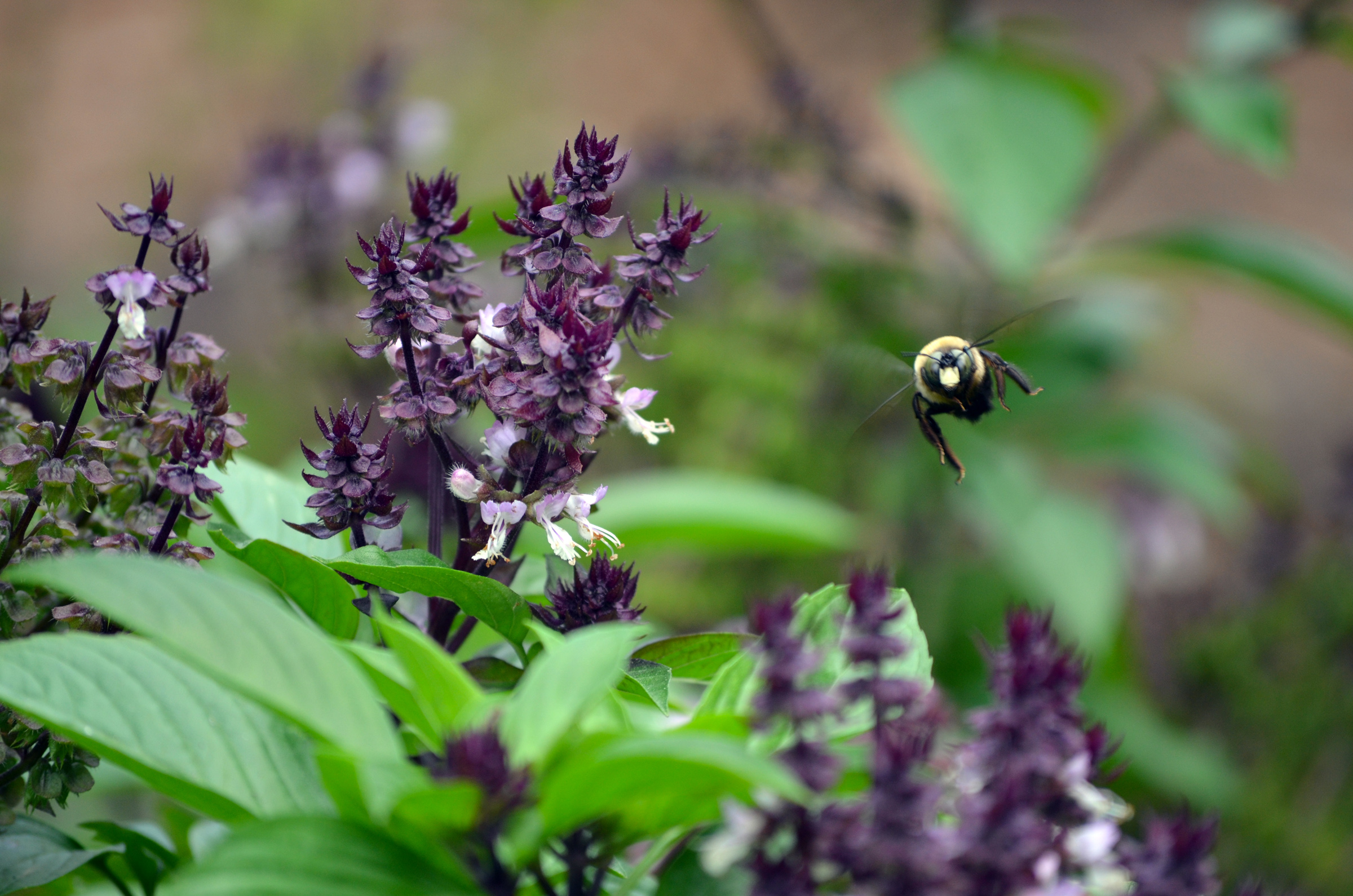
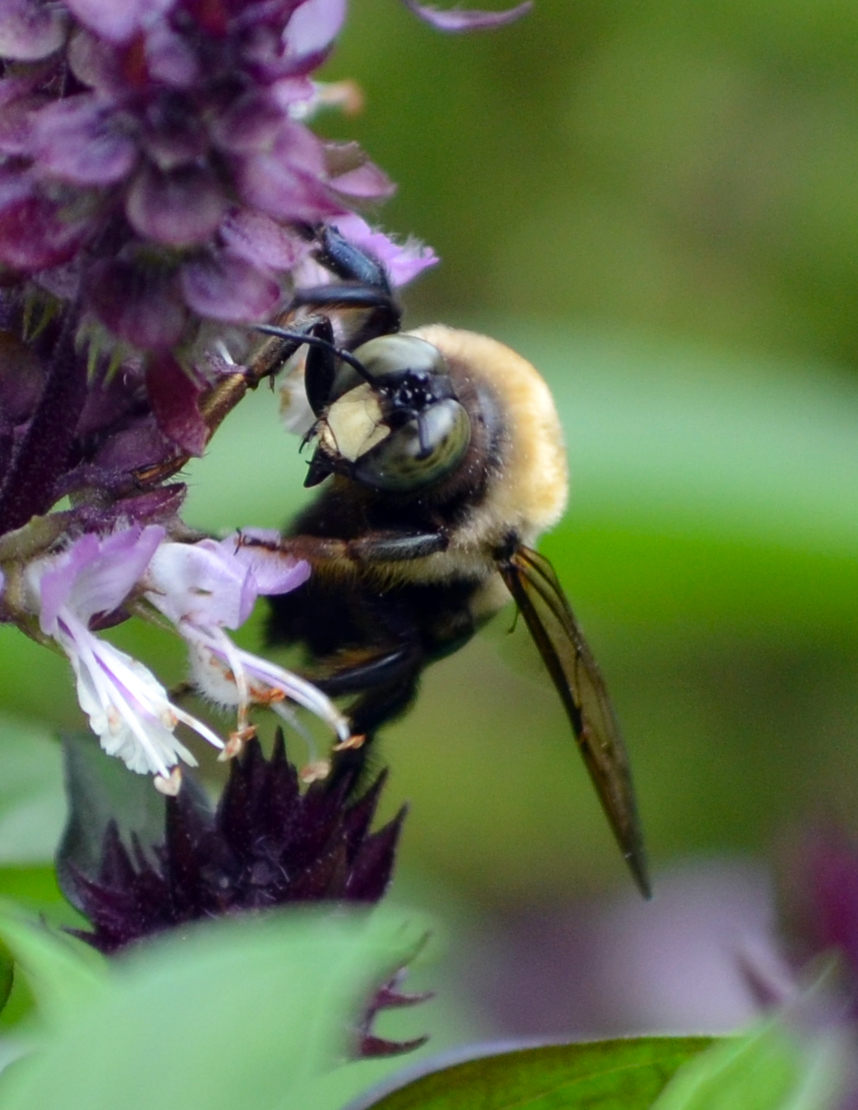
Bumblebee
A/K/A Bombus terrestris
(Click any of the photos for full page view).



Okra Machine
(Warning: A rambling almost pointless post with typos follows.)
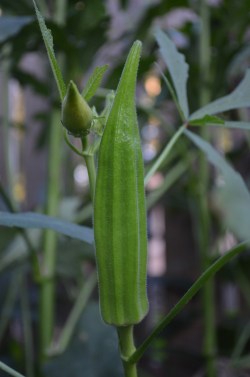
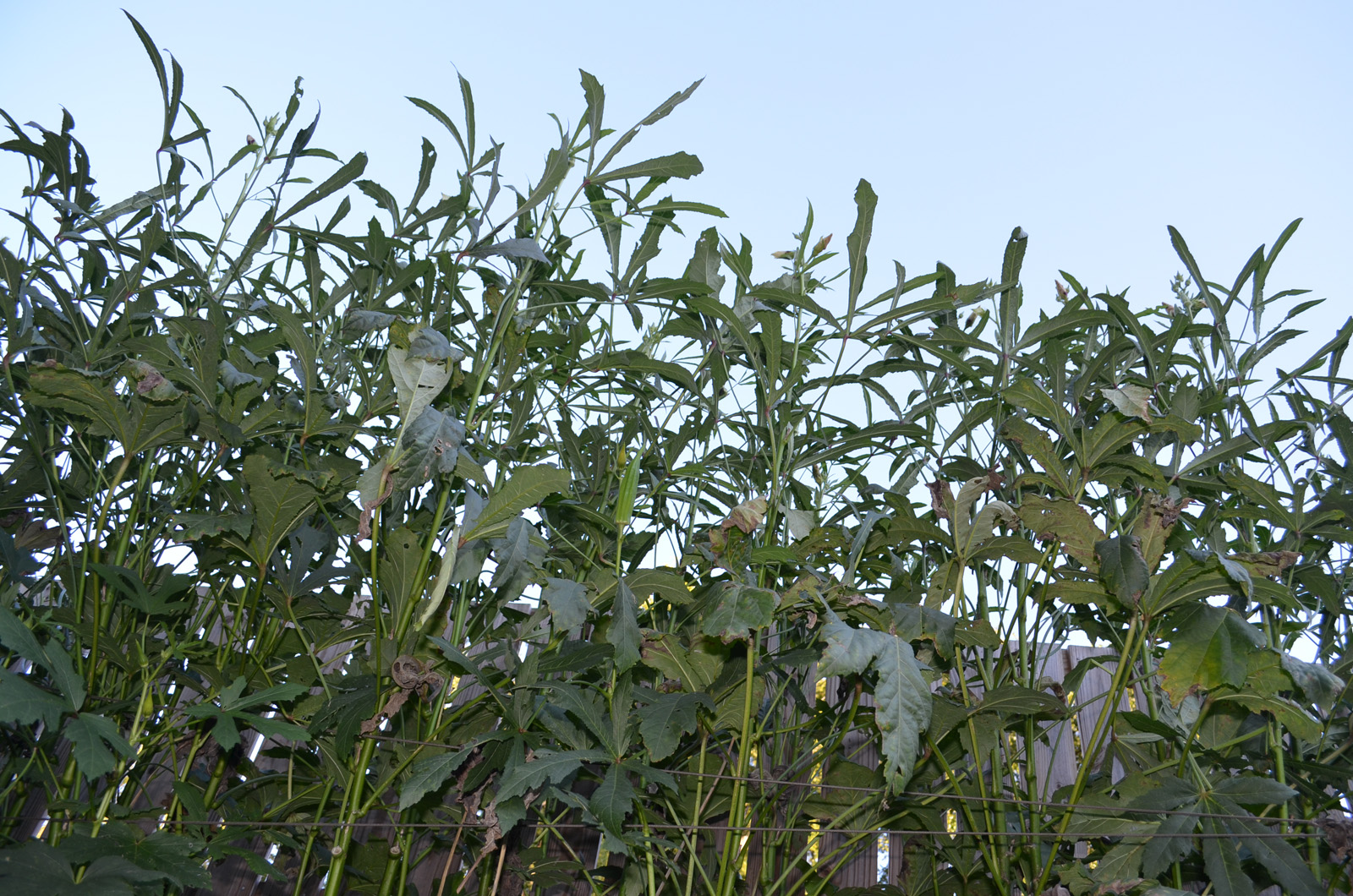
For a couple of people who a few months ago didn’t think we liked okra, we sure have eaten a lot of it this year. The “Okra Machine” cranked into high gear in mid July and by August we found ourselves eating roasted pods almost every day. No messy frying, no gooey boiling or sauteing, we just give it a spray of olive oil and a little salt and a few minutes in the oven. We snip the pods when they are small (probably smaller than we need to in order to avoid the large “woody” ones that everyone has spit out sometime in their lives. Admit it, you have.)
I planted “Clemson Spineless” again this year but moved it to a “trial” spot against the back fence since there is a pond in the spot I used last year.
The okra seed goes straight into the ground, in good old fashioned dirt, vs into the fluffy soil mix of the raised beds.
Does it mind? Apparently not. The soil is pretty good all things considered; it is a clay base with about 30 years of leaves and other organic matter composted into it. Also, the drainage against the back fence is pretty good since the ground level drops off behind the fence, really just sort of a raised bed itself. I ignore the seed packet spacing recommendations (ie plant all the seeds an inch apart, then thin to 2 feet so you buy more seeds next time too) and plant a couple of rows a foot apart with maybe 6-8″ spacing between pants by the time all it said and done. Okra is quite “competitive” and tolerates a crowd well without disease and diminished production imho.
The plants are now closing in on 10′ and have started putting out side shoots with new blooms & pods; by now we are well practiced in the art of walking the top of a tall plant down to 6′ or so with one hand and snipping/catching a pod with the other.
Click the pic for a “worm’s eye view” of the Okra Machine preparing another day’s output:
Odd, this…..
I posted some time back that I’m located in about an “urban” setting as one can have in a town of 40 – 50 thousand.
The satellite shot of my immediate neighborhood is below

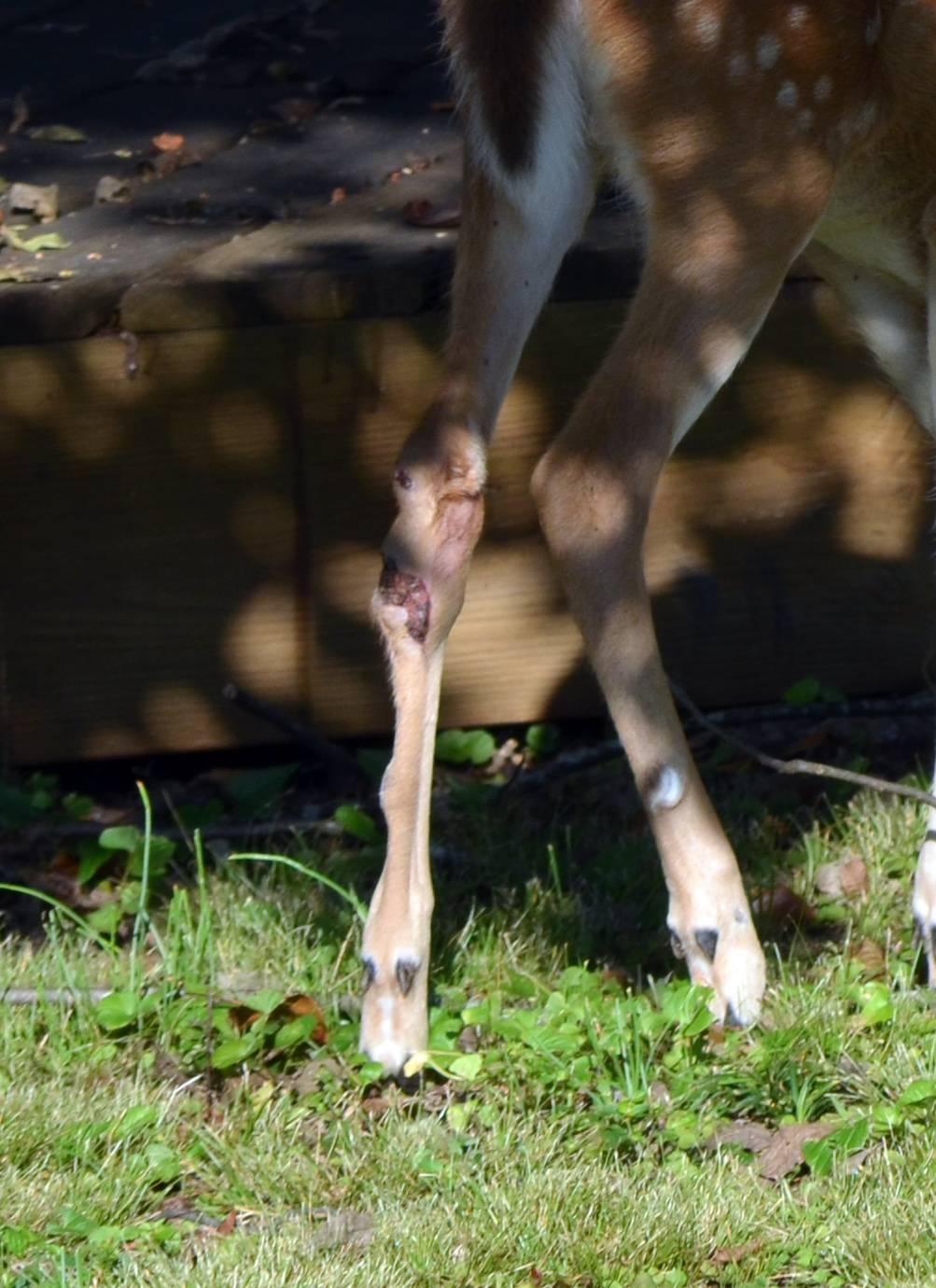
Now, from time to time we have had raccoons, possums and foxes pass through. A couple months back, a doe and two fawns moved in… the doe has apparently moved on but the rapidly maturing fawns stayed behind and seem to be planning to call this “home”. They don’t seem to be particularly nocturnal anymore (they were when mom was around) and for the last couple of days have been down next to us in the morning.
As I pulled the last of the tomato plants this morning, i had the back gate open and they seemed to be waiting for me to go in so they could come in a graze a bit….


What the heck?…….
Edited to add thumbnail of damaged leg; if you want to see it click it for a larger view. My guess is a large dog has this one by the back leg a few weeks ago before he managed to free himself. He seems no worse for the wear though.
Papilio Polyxenes
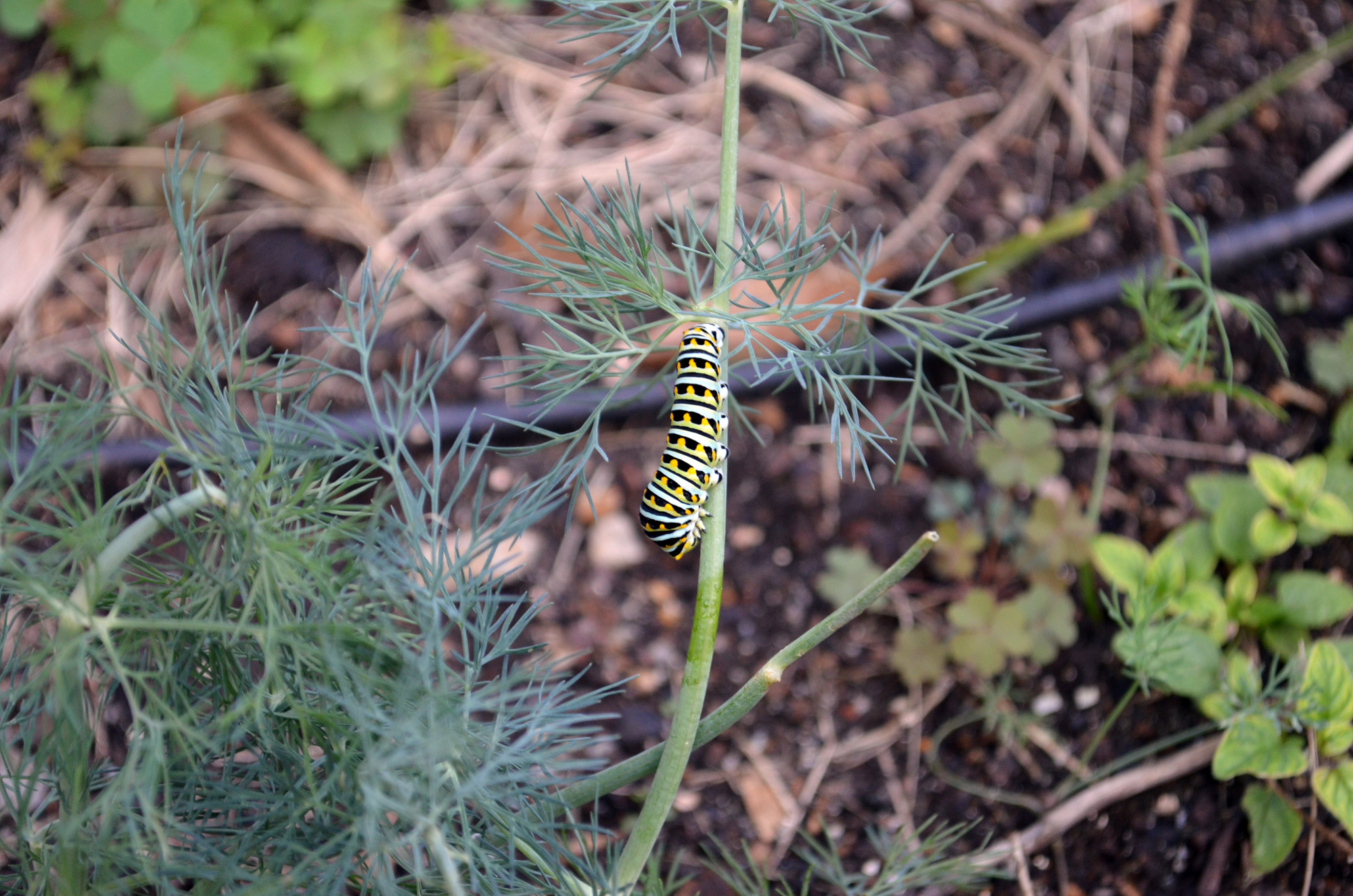
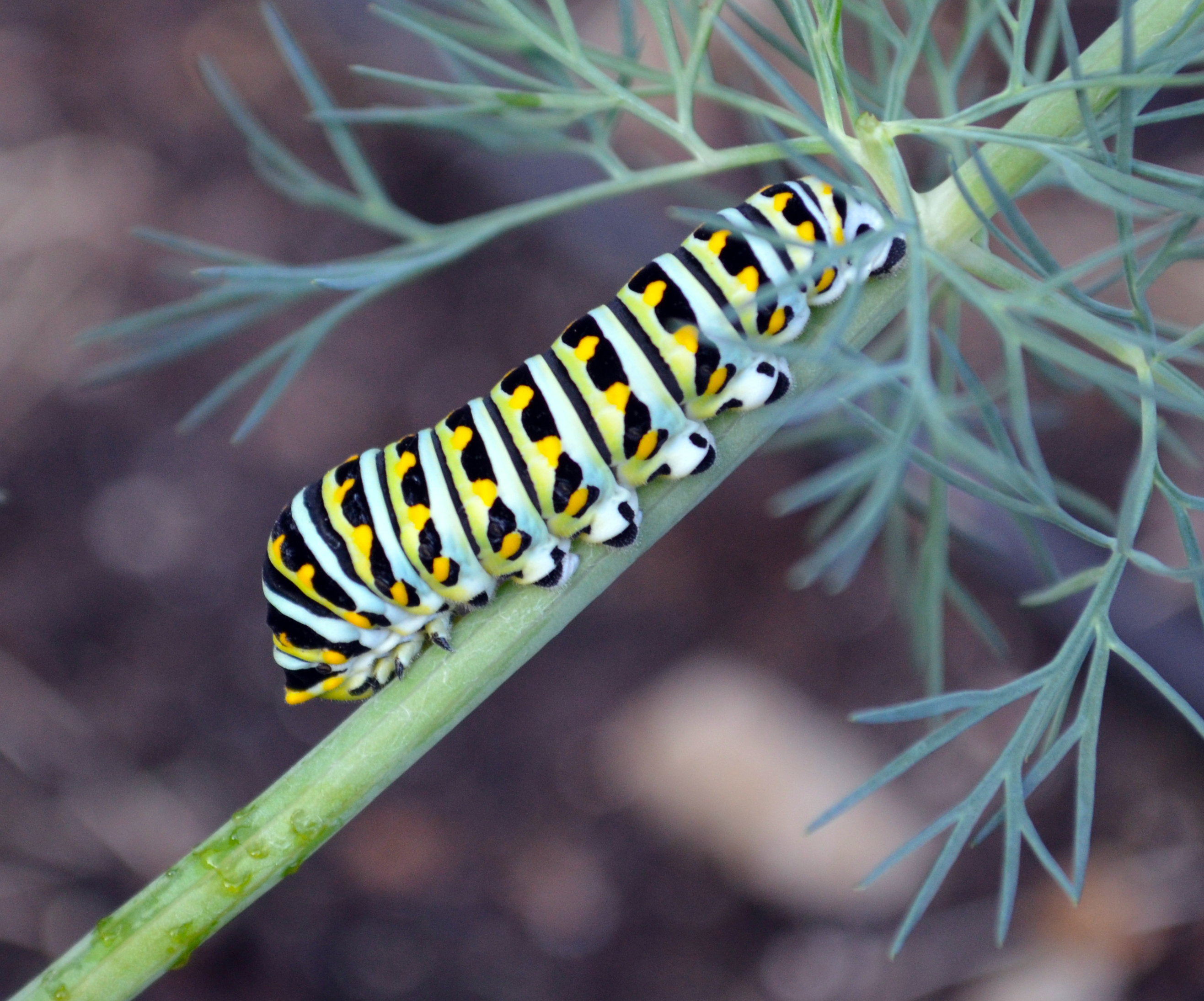
Black or American Swallowtail butterfly
Actually not a butterfly at this point but just a healthy looking caterpillar.
It turns out parsley, carrot and dill are among the favorite foods of these and more than likely this fellow hatched from an egg laid in the parsley thicket a couple feet away. Apparently the small exposed dill volunteer was tempting enough to entice leaving the relative safety provided by the thick cover of parley.
He has already nubbed off one stem to the right….
A closer view; if you click through the picture twice and fully enlarge it you can really see the difference in the fuzzy middle legs/feet and the clawed rear ones. (That is if you are bug-geeky enough to care…)
More via wiki, including nice photos of “the finished product”: The (eastern) black swallowtail (Papilio polyxenes), also called the American swallowtail or parsnip swallowtail
I’ve got herbs to spare for these guys, so they will be left to eat as they wish.
Another Spur of the Moment Fall Harvest
Over the last month or so I have raided the smaller section of sweet potatoes (Vardaman) three separate times to “sample” the crop. On a whim I decided I would pull the remaining tubers and get the bed ready for an early fall garlic planting.
Everything I have read suggests harvesting early in the day and when it is relatively dry.
Ooops.
So far each harvest sample has been in the evening and we’ve been getting plenty of rain lately. Since these potatoes won’t make it to long term winter storage in the basement (Mrs cohutt has assured me of this), I’m not that worried about “perfect” harvest conditions. In fact, I’ve mauled a couple of the potatoes previously harvested and they seem to heal over just fine for during the 2 week curing period. I leave them, dirt, mud and everything still attached, on the back porch in a tray in front of a fan for 24 hours. The dirt crumbles off after that and 2 weeks later the skin is tough enough to brush clean for cooking with minimal damage.
As you can see, I am still learning and managed to break a couple of nice sized ones turning the soil with a spade. (Note to self: plant in wider beds or in hills next year for better 360 degree harvest access.) The “wrong time to harvest”, on a damp evening:


In front of the fan for a day or so to dry:

My original intent for the evening was just to lighten the load on the jalapeno plants after losing a couple of branches to “shear” caused by excessive weight (and of course to do the daily okra snipping lest monster pods be formed).
Ooops again. Gotta find room for these until I can cut and freeze for “poppers”. 😉


 Behind cohutt's fence