Hoop house & looming lettuce bounty
Here, March brings the right temperatures in the hoop house for lettuce. Lows are generally in the 30s or low 40s with the possibility (“probability” is more accurate) of frosts and freezes into mid April. I can generally leave both the window and door open around the clock and there is a modest enough bump in the soil temperature to greatly improve growth rates vs the same outside and “un-sheltered”. Nineteen years ago we had the deepest snow I’ve ever seen in Georgia on March 13th (12-14 inches) when “the perfect storm” blew through, so I need to remind myself what winter CAN still bring regardless of its mildness so far…..
The days are lengthening quickly and the lettuce seedlings I transplanted into the hoop house are growing rapidly; these were transplanted from the speedling trays in late January when they were tiny.
The middle bed will be taken as far into the summer season as possible with lettuce and other cool weather greens since this year it is out of the tomato rotation.
We have been lettuce rationed for so long (I cooked the fall batch in the hoop house while trying to work out the temperature regulation scheme) that after watering the middle bed this afternoon I wanted to lie down in the middle of this tender patch of young spinach, simpson and romaine lettuce (note the spindly kale on the left that just keeps growing as we have eaten the leaves from the bottom of the stalk upwards):


Some (mostly) simpson lettuce in the upper bed:

The spinach in the lower bed has made a terrific comeback with a little help from a dose of fish emulsion fertilizer:

The “spicy micro-greens mix” isn’t so micro anymore; I just let it grow when the lettuce tanked and now have some formidably hot (mainly) mustard greens to blend into the milder mixed greens we’ve been nibbling on lately. The Chinese red mustard is my favorite both in taste (think sinus-clearing afterburner) and appearance. You’ll have to take my word for it with the taste but I will offer the two pictures below for your judgment of this mustard’s appearance:


On the way out I noticed something odd with the brussel sprouts. I had topped the plants a few weeks ago to force a more rapid plumping of the sprouts on the stem. (The tops look like a loose tennis ball sized cabbage and are quite delicious cooked as one). The sprouts look like they were riding an escalator up that abruptly stopped:

The time I spent in the hoop house watering and taking these pictures motivated me to cook something fresh this evening. Two types of kale plus a leek that mysteriously stuck to the palm of my hand and came into the kitchen with me formed the base of a delicious soup.

It was a relaxing and productive weekend; I weeded, added a few hundred pounds of fresh compost to some of the beds, moved a couple more boxwood and enclosed the area under my back porch so that the neighbors don’t have to look down into the “storage” area underneath (Who’s idea do you suppose this last task was?)
Slugfiti
The slugs
…
In the hoop house
…
At night, they party
…
They stay up late cavorting
…
Then go on drunken joy rides up the walls

…
It is a wonder any of them survive……

Neglect
In the past here I’ve posted about my slackness and propensity to generally neglect plants or beds that are past their prime. More often than not the neglect means nature eventually runs its course and the end result is positive. A good example was the bolting spinach I just let go brown and dry on the stem (see Seed-Saving-Shame); the end result was I realized I never will have to purchase spinach seed again….
Soon after I learned that the more you ignore arugula, the more arugula you have to ignore.
This picture of volunteer arugula is from December’s “Hardy Volunteers” post.

Two months later this beautiful specimen is a little long in the tooth after having leaves periodically snatched from it to spice up winter salads. But that’s fine, it has long since passed the prime edible stage and is now diligently flowering:


This plant (and several others around it) were volunteers from the seeds that spilled from the dried seed pods I was carefully handling (or so I thought)after harvesting them from the previous season’s volunteers. We’ve enjoyed having these popping up all over the place like dandelions (a cousin btw) over the last 16 months; as little as dragging a hose over them would release the great peppery aroma to float throughout the garden.
I think I’ll honor this plant by taking the neglect of it to the next level: I won’t cull the plant or harvest the seeds; I’ll let it go full cycle and complete the whole “ashes to ashes, dust to dust” process. The seeds will fall where they may and we’ll see what comes from it.
_ _ _ _ _ _ _ _ _ _
One other bit of neglect may come back to haunt me. Last November I left a few late luffa gourds on the rock piles to finish drying. Unfortunately they remain there still, mostly with the skins disintegrating naturally and dozens of seeds quietly falling into the cracks between the rocks. These are the Cucurbitaceae family’s equivalent of kudzu; the vines grew 30+ feet in every direction last summer, on and over everything within reach.
DANGER: LUFFA SEED SPILL

Summer could be fun.
Ha.
Alliumtown
Allium is a genus of plants that contains several hundred species, almost all of which are native to the northern hemisphere (and almost all of these native to Asia). I’ve read that the generic word “allium” is latin for garlic; being deprived of learning dead languages in school, I’ll have to assume this is accurate.
This time of year the garden alliums stand out- leeks, garlic, onions, shallots. They have all grown on very slowly during the cold short winter days without fanfare; so slowly that their growth is barely noticeable week to week. With most of the garden beds outside of the hoop house at least partially fallow, any plants stand out and these stealthy growers seem to have appeared overnight just as winter is waning.
This weekend as I planted the last of my allium for the “season”(both sweet and traditional storage onions) I noted the temporary window of “dominance” the rest enjoy over the otherwise mostly dormant beds.
Welcome to Alliumtown:


While from a distance, these leeks, shallots, garlic and onions all look the same, a closer inspection reveals otherwise.
“California Early”, a softneck “silverskin” type of garlic, is our staple garlic again this year. The gazzilion heads of this we grew last year were sorted and the largest cloves of the largest heads were saved for seed and planted last fall. So far, the plants on average are larger @ the stem this year than last, which bodes well for the improving the stock (as measured by size and general robustness).
The plants on the right are typical and look very good for the last week of February:

Oops. The multiple stemmed “plant” on the left is the result of mistaking a cluster of small cloves for a single large clove as garlic doesn’t send up multiple shoots from a single clove. (I need to be more careful sorting next fall.)
I had a lot of surplus smaller interior cloves of California Early after planting the largest ones; I decided to crowd them into a tight grid in a small section in order to produce a supply of “green garlic” later this spring. Green garlic is pulled as it begins to bulb but before it cloves up; the taste is a sweeter, somewhat milder version of the final product with a hint of “green onionish” flavor to it. This patch is coming along just fine:

A closer view shows it to be similar to the smaller multi-clove “mistake” previously mentioned.

I also have several small additional plots that include of an unknown hardneck variety in its third generation here as well as the interesting red creole variety “Ajo Rojo” (previously referenced here) at the beginning of November when I got the cloves in the ground.
Note the taller or longer “neck” on the Ajo Rojo vs the Califoirnia Early (I have some inside the hoop house as well, it appears to be slightly larger than this outside bed):

The Ajo Rojo has a distinct look vs the silverskin softneck garlics like California Early and most grocery store garlic. The picture below is from PotatoGarden.com , a great source for both seed potatoes and garlic. It has fewer but larger cloves with no interior cloves like hardneck varieties.

The second generation of “Elephant Garlic” is also looking robust at this point; EG is a leek that happens to bulb up and clove like garlic but isn’t a true garlic. This was from the cloves of the plants that were so large last spring that a contractor doing some work on our home asked what kind of corn it was. (I have high hopes for this year’s crop 😉 ) The Russian Red Kale behind it is subletting the middle of this small bed for the winter. (More Elephant Garlic is in the foreground of the first picture of this post)

The “normal” leek bed is continuing to improve despite the extremely late planting last fall. I pulled back the mulch to inspect the blanching progress; it appears to be going well as there is another 6″ of stem below what is visible here beyond my garishly white knuckles.

The 2nd generation of French Red Shallots is coming along decently; I have been planting these successively since last fall in order to test how much timing affects the plants sending up scapes as well as final size. Shallots send up multiple shoots from a single clove or bulb and eventually each shoot bulbs up individually as opposed to cloving like garlic.
Recently planted shallots sending up a nice number of shoots:

Earlier plantings of the same are much further along:

I traded some shallots for some yellow “Potato Onions, a type of dividing or multiplying onions that was popular 100 years ago. Before the wide availability of onion sets and seeds, the potato onions proved a reliable way to propagate from one season to the next. “Normal” or traditional onions don’t divide or multiply, instead they flower and create a seed head. These potato onions behave more like shallots, a single fall planted bulb sends up multiple shoots and divides under the soil. At harvest the following spring/summer, a cluster of several onions of varying sizes is found. The larger ones are eaten with the smaller ones saved for planting in the fall for the next year’s crop.
The growth habit looks a lot like shallots as well:


The last allium to be planted this the season (which I count as fall of one year through June of the following year) were the short day onions I put in this weekend.
I put in two types of sweet onions using bundles of tiny plants (they look like hell but they should take hold and perk up in no time:

The other plantings consisted of a variety of red, white and yellow “storage” onions using sets (small immature bulbs.) This doesn’t make for a great picture now but you can see the tips of the little bulbs planted on 4″ centers just under the surface, with more California early garlic in the background:
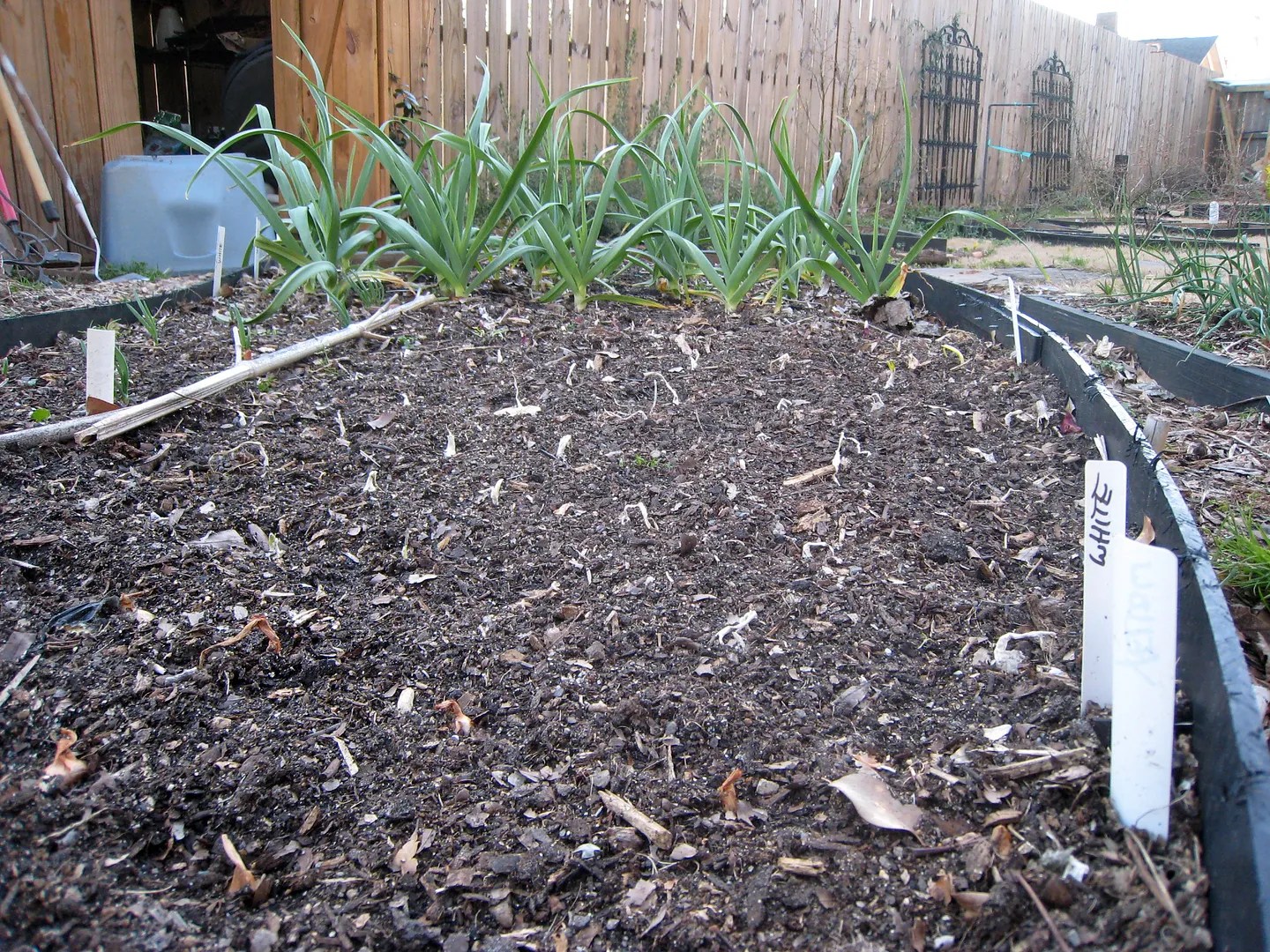
And that’s about it for the Alliumtown post. (Despite the most excellent photography, several of you will likely finish and think “They still all look the same to me”.)
PS: I’m tired after moving boxwoods and cleaning up the back corner this afternoon, so please forgive the inevitable typos I have missed.
I knew it
I figured that we would have some freak storms roll through within 48 hours of the bat house going up; it turned out I was wrong.
The freak storm showed up 72 hours after it went up….
We’ve experienced more storm and wind damage in this area in the last 11 months than the collective 11 years prior. Last spring was horrible but it didn’t stop there- a tornado touched down a couple miles northwest of my house the week before Christmas, then last night a small but violent storm cell got legs about the time it crossed over town and we had another tornado touch down a couple miles to the east.
Enough suspense:
I know you all will be relieved to know that the nifty new bat house remained in one piece up on its stilts. It swayed a bit but seems no worse for the wear.
Tonight the boom structure thing was dismantled without injury or much cursing and the house now stands alone (please disregard the black garbage cans in the picture, they are full of compost and were too heavy to move without a lot of huffing and puffing) :


Several people have asked how the bats get in and out and the answer is really pretty simple.
The house has no floor:

The picture is from directly below it. You can count the 9 slim rooms or chambers in the box and see the screening on the lower extensions in the middle (aka the landing pads); the metal roof distorts things a bit since I made it with so much overhang but you get the idea.
Oh, and I have some onions to plant this weekend.
That’s all….
Myotis lucifugus, placet tenere domum tuam vespertilionem
or, in the local venacular, “little brown bat please occupy your house”
Myotis lucifugus aka “little brown bat” is one of the more likely species to take up residence in this monstrosity on poles.
Of course this means it is up:

I successfully engineered my way through my own pigheadedness and raised this sucker today (not playing hooky, it was a holiday for my company). I constructed a boom (still up behind the house in the picture above) and winched all 175 lbs of pipe and bathouse 20 feet into the air above the garden.
The boom lurking above the fence line:

The boom in action as the house is lifted up:


Braced up with 2x4s so I could remove the tension from the cable long enough to reload the “come along” I used as a winch (the amount of cable on the spool wasn’t enough to pull up the house in one session; it took about twice the cable that the spool held.)

And it is done

It has been suggested that the next energy I spend be dedicated to taking the boom down and cleaning up the yard.
Mrs cohutt always has the bestest ideas.
Poles
Poles for the bathouse that is….
First, the pivot joints:
Amazingly, the holes I drilled in the support posts lined up perfectly when I drove the 3/4″ pipe though them (I almost forgot to thread the “hinge Ts” on though.)

The pivoting hinge Ts are 1″; the 1-1/4″ pipe slides over 1″ with very little room to spare. A close up of the hinge, with one of the 1-1/4″ support poles pulled back a bit:

From the opposite view, testing for vertical “plumb” and ready to screw together to top sections:


I managed to get the poles joined, bolted to the bathouse and lifted a few feet off the ground before I quit for the day:


It about gave me a hernia getting this thing 4 feet off the ground- only 16 more to go.
(Ha.)
Closer
The rain held out today and I managed to make a little progress on getting the bat house ready to hang.
First, I buried these 6′ 4x4s 3′ deep in concrete as a “foundation” for the pipes I will use as poles.

The 3/4″ galvanized pipe on top (the board connecting the poles is just a brace while the concrete sets)
will be installed as the axle for the pivoting base of the “tower”, ie two 20′ 1 1/4 galvanized poles with the house suspended between them. Two 1″ Ts with 3′ of pipe screwed into them will have the 3/4″ axle through them with the ends resting in holes cut through the bases of the 4x4s. The 1 1/4″ “tower” poles slide over the 3′ sections of 1″ pipe and theoretically I’ll be able to walk/winch up the whole thing with the bat house bolted to the top.
Riiiiiight………
It should be interesting regardless of whether I am successful in engineering my way out of soliciting assistance from any number of friends who have offered to help. Is it stubbornness? Maybe.
Or maybe it is just to see if I can come up with a system to do it.
Speaking of the bat house-
It has been sitting up on blocks awaiting a final coat of stain (mahogany this time just to unblacken it a bit), attachment of screening to the landing surface under the open bottom of the house, and of course the proper marking of the house as being one for bats.
Ready for attachment to the 1 1/4″ tower pipes (maybe tomorrow):

A Peek Into The Foil Lined Food Nursery
The temperature control has been worked out.
Over the last 48 hours, the thermometer readings have been between 78 and 81
So is the scheme working? It would appear to be off to a good start. I seeded Sunday and on Wednesday the early cabbage was coming up.
Today a little of everything is coming up, with the cabbage and chard leading the way:
Cabbage
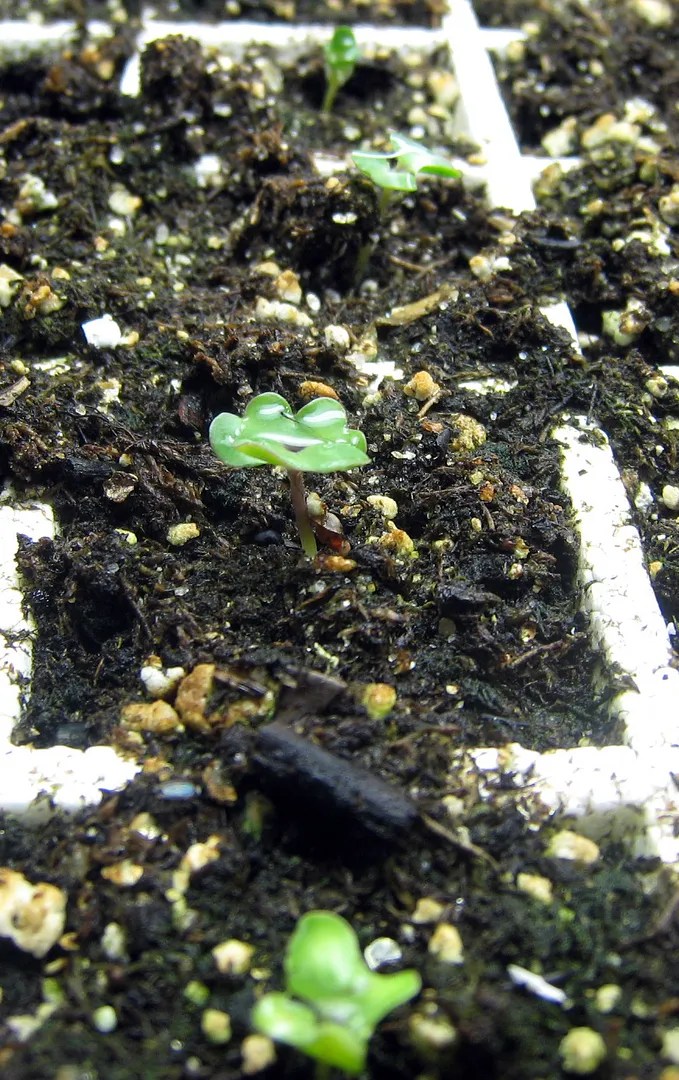
“5 color silverbeet” chard

Wider angle of the same for scale, with lettuce off to the left….

And yes, I am as surprised as you when things work the way they are supposed to…

 Behind cohutt's fence