How I spent my weekend Pt. 1
This spring’s load of composted dairy cow manure, 35 or 40 wheelbarrows full. And yes, the tailpipe is almost dragging.
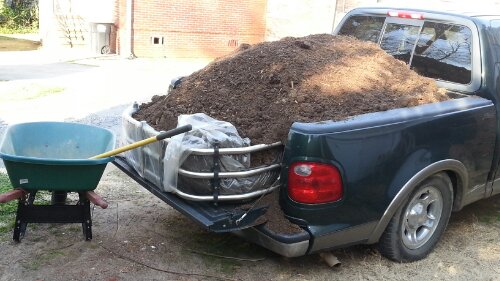
The picture was from around 10:00 Saturday morning; Sunday evening, still a little to go.
Just a picture day
Pizza dough.
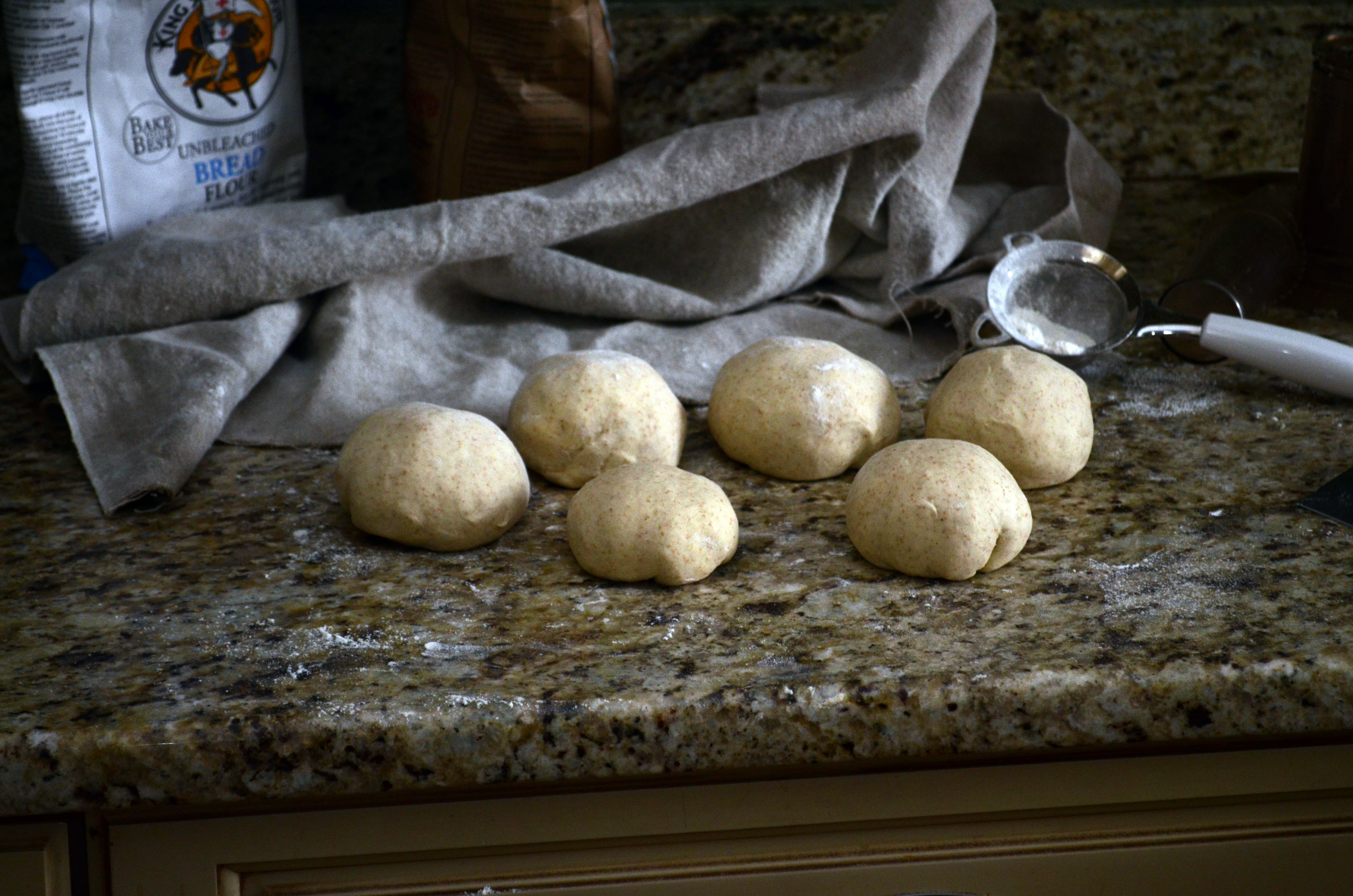
That’s all.
The Broccoli Hydra
Here it is March and my tired old broccoli plants are still producing after 6 months of “winter” abuse. The main heads were all great- quite large, the largest I’ve grown so far in 4 seasons.
These were harvested way back in October or November and this set off the “hydra” effect.
If you have forgotten what the Lernaean Hydra was in Greek mythology, you can follow this link for a refresher. It was a wicked beast, one which grew back two toothy heads each time one was severed.
Broccoli? Hydra?
Yeah well it is a stretch, but if you leave your fall broccoli plants to grow as along as your seasons allow and continue to harvest the side shoots / florets, a similar thing occurs. The first main head is a single large head, after it is cut 2 or 3 side shoots start growing, as they are cut, more smaller shoots start off of those stalks. This multiplying effect continues as long as you keep cutting and eventually you are up to a dozen or two small florets to snip from each surviving plant.
As they multiply, the average size shrinks and the plants’ large fall leaves yellow and begin to die/rot. In the end you have a plant that just looks worse every week until it is just time to thank it and add it to the compost pile.
See what I mean?

Pretty eh?

These plants are going to retire this weekend. When I begin to detect that ominous whiff of rotting broccoli (the larger cut stem ends begin to deteriorate eventually), I know I’ve pushed the hydra as far as it can go….
In the meantime, they provided a nice harvest of tiny sweet florets this evening, half of which went into a stir-fry comprised of the other winter remnants I managed to scavenge this evening.
In addition to the broccoli we came up with a couple of turnips, a few small carrots, a kohlrabi, a couple of tiny bok choy, and some shallots and garlic from the dwindling supply stored in the cellar.

The stir fry that resulted was delicious. Agree?


Loofah Surplus
The (luffah) loofah (luffa) gourds have been drying all winter, some on the vine still, most on a rack in the shed for the whole winter…… looking pretty rough.

Well, a few days ago the sun was out and I had a few minutes to do something but wasn’t really looking to do something that felt like work, so I decided to clean some of these.
The way it goes: pick the bottom of the shell/skin off (it is easy), shake out the seeds into a container (beware, I found dropped seeds are kudzu by mid July), then peel the rest of the skin off.
Once this is complete, I soak them in a water/bleach solution for a few hours then rinse and place back out to dry.
How do the nasty, crusty old brown gourds look cleaned up and naked?


But high above the shed one last gourd remains. Did I mention these vines grow like kudzu?

(And after showing a picture of the worst view of the worst corner/border of the back yard, I am sure I will catch some grief from mrs cohutt. Don’t worry, I will post picture of my newest fence of penance when it is done this summer.)
I almost choked
I ran home at lunch because I had forgotten to vent the hoophouse this morning and it had become a warm sunny February day.
My sunglasses eventually de-fogged after I managed to open up and vent the hoophouse a little so while still inside I removed the poly row cover from the rapidly growing artichoke plant.
I knew it was doing well and believe I’ve posted evidence in recent weeks.
Still, this was a nice late winter surprise, or really perhaps a better classification would be “shock”:
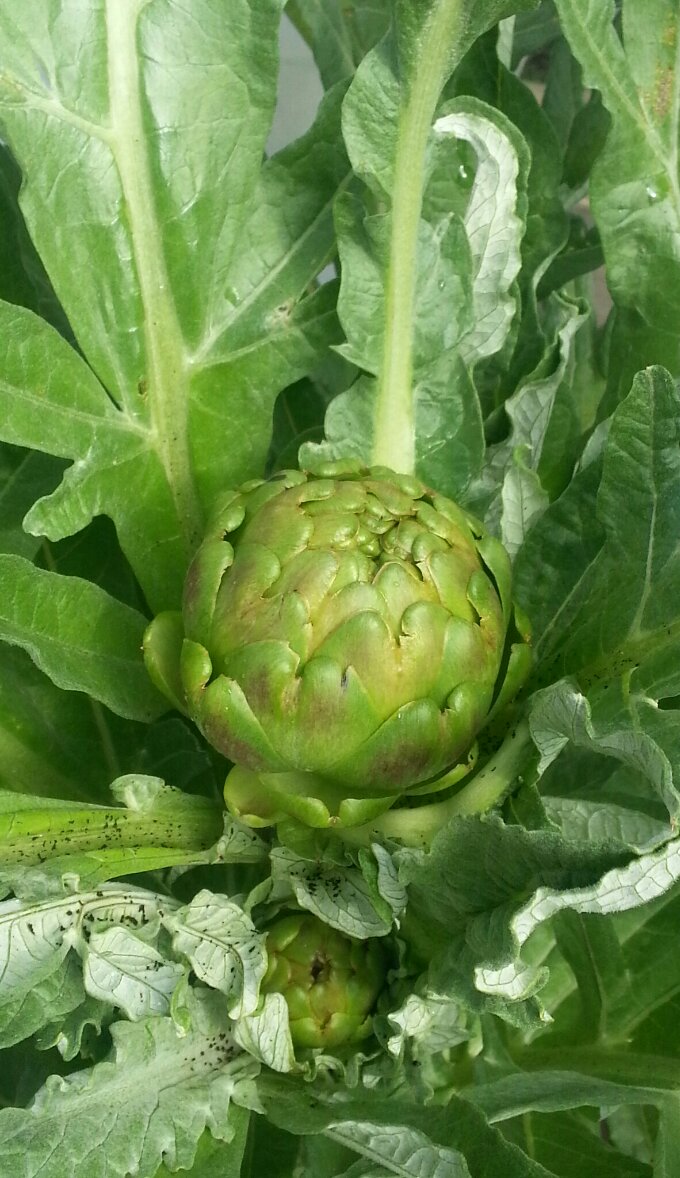
The picture also tells me I need to investigate and find the frass source but that can wait a day or two.
Scallion Nubs
I read something somewhere sometime back:
After you cut the last 1/4″ off the base of a grocery store scallions, if you plant this nub with its root remnants directly into the soil, it will regenerate.
So I did…
And it did…
Seriously, these were in an area adjacent to some onion sets last year and I became frustrated when they failed to bulb. Eventually (after the green leaves stayed healthy and green for the entire summer) I remembered that these were my scallion nubs.
So I ate a few and then divided most of the rest last fall to allow for another multiplying cycle; each one becomes a cluster of 3-5 (as in the first picture below) after being given a little room and some time. Also, the individual onion stalks are larger in diameter than I recall the originals being. Note that these are very slow growing, maybe a little more than a full year to reach the current size.
Conclusion: Not bad for a low expectation/almost forgotten experiment.


Not from my garden
Nothing from my garden today; just something I came across last weekend while taking some time off.
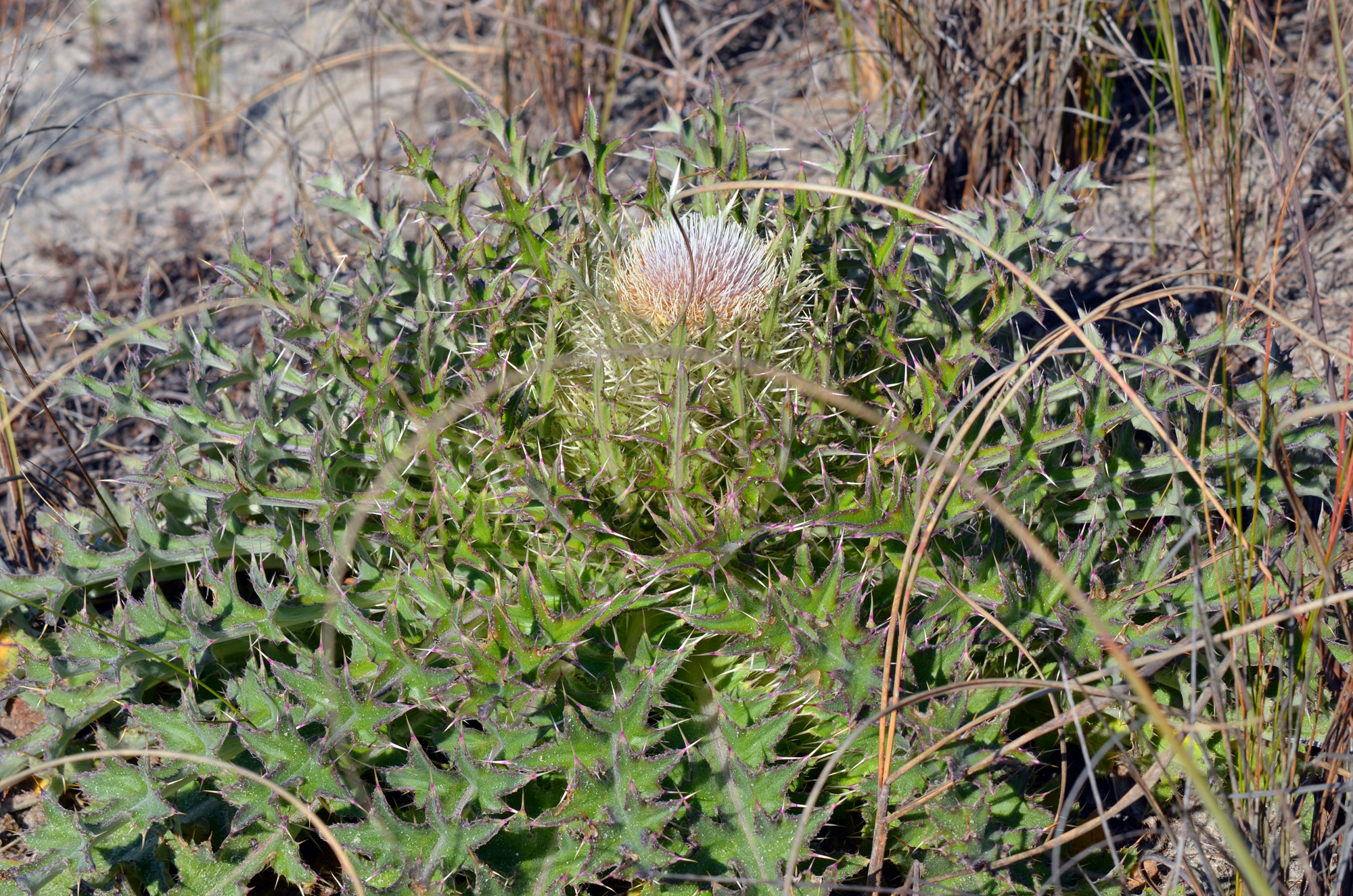
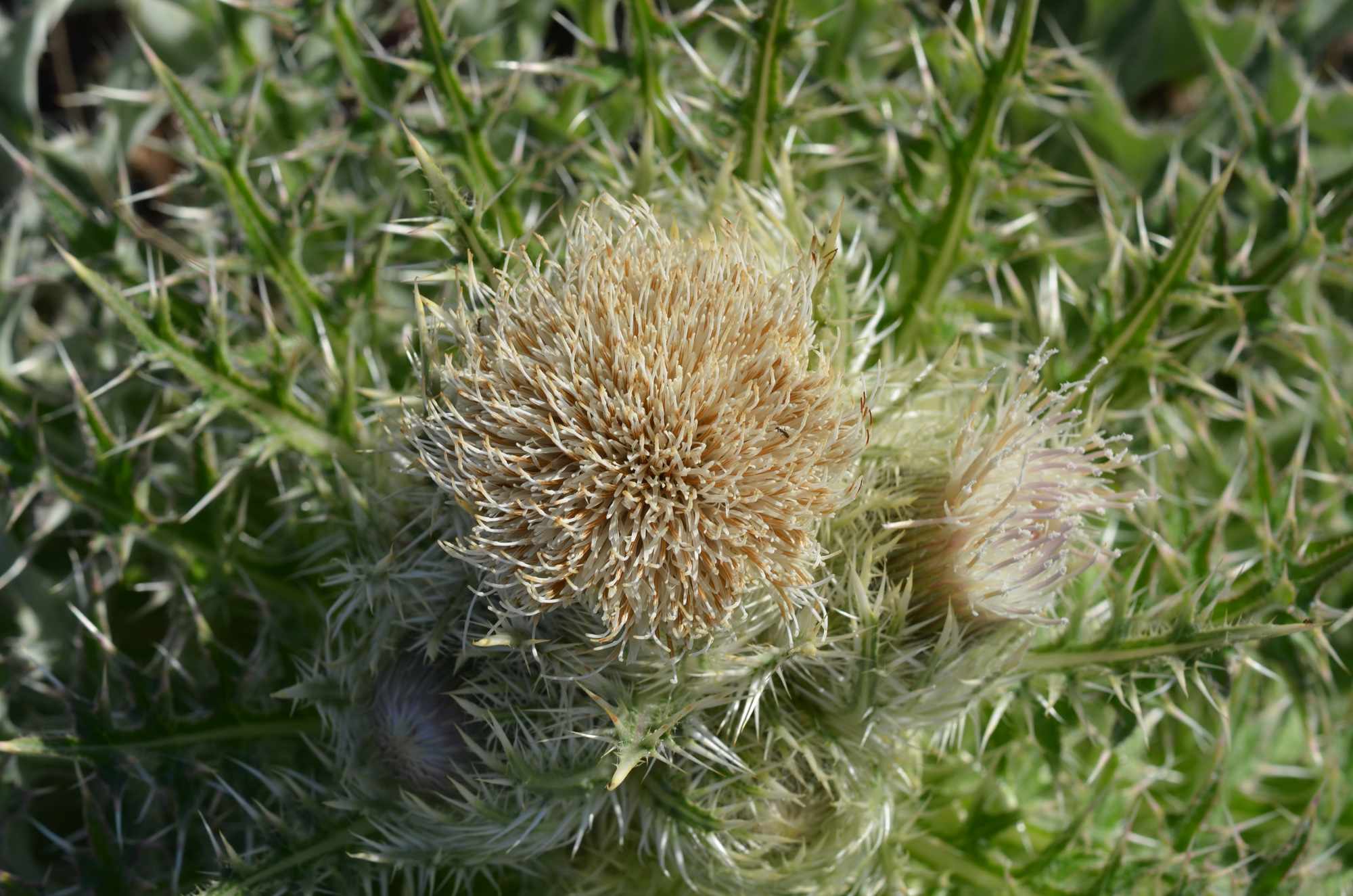
Cirsium Horridulum – Yellow Thistle
In the otherwise brown winter dunes these green dragons caught my eye from a distance.
Attractive native wildflower & valuable resource for native bees, or a particularly nasty weed?
What ever one considers them to be they were quite impressive up close.
However, if I never see one in my garden I’ll be a happy man.




Go Big or Go Home
The leeks that are in prime harvest now were started lasit March using the staged process described here in “Leek Geek”. They are about as fat and long as they are going to get by now; while I could have harvested them en-masse any time in the last couple of months, I’ve left them in the ground and pulled a few as I have needed them. This time of year they are basically dormant and The cold weather seems to give them a sweeter flavor, so why not leave them “on the stump” (in the root?) until consumed? Nothing seems to bother them (and I don’t have to buy an second refrigerator just to store them).
All this is good for now but in another week or three, the central flower stalk will begin to form and as it does it hardens and changes the flavor of the remaining layers slightly. So…
Time to get busy.
One of our favorite soups is a simple leek and potato soup as described here:
The first time around last year, I peeled the white flesh russet type potato as described and ended up with a beautiful and tasty soup. After those first couple of batches, using unpeeled potatoes suddenly became an attractive alternative. (Of course just for the nutritional bonus of the skins and not because of the tedium of peeling several pounds of potatoes with each batch. Right.) Since then I’ve used the small to medium sized red potatoes as stocked in the mountains of 5 lb bags at my local Kroger.
With a front movng in for most of Sunday afternoon, I decided to spend the cold rainy day inside making a big batch of soup (this freezes very well since there as no milk or cream is added.)
I had pulled a bundle of leeks the day before when the sun was still out and was ready to get going.

Problem #1: Of the two 5 lb bags of potatoes (from the Walmart grocery this time, not Kroger), only one weighed 5 lbs. The second fell short at approximately 2.75 lbs. This bugged me because I wanted to make a double batch and that meant 10 lbs, so a second run (to Kroger this time, where 5 lbs means 5lbs 😉 procured more red potatoes and it was time to start chopping leeks.
They are so damn pretty that you have to see another picture:

OK, two (more with the fancy, lethally sharp Swilling Japanese style Deba knife I found in the mutilated packaging of a second smaller knife on sale at my local TJ MAx for a few dollars vs the $180 I’d seen it listed online for. 🙂 )

After the leeks were chopped and ready I meticulously chopped roughly 10 lbs of potatoes into 1/2″ cubes +/-.
Problem #2, albeit a minor one: The red potatoes from WalMart had a distinctly yellow flesh.
Before I went out to cut the parsley, thyme and marjoram (actually not, I subbed a little oregano), I opened the recipe (for the first time in this project, after I could remember the main proportions right) to double check the amount of each herb I needed.
Problem #3: the recipe was for 2 lbs of potatoes, not 5 lbs. So my double batch was now a quintuple batch, at least as far as the 10+ lbs of chopped potatoes were concerned.
So I recalculated the portions for the herbs and went out into the rain to cut a quick batch of each and return. Or so I thought.
It dawned on me that my leeks were out of proportion now and I needed another handful to get that in line with the potatoes. Cutting herbs in the cold rain is tolerable or maybe even mildly pleasant; digging stubborn muddy leeks under the same circumstances however is not.
After I changed out of my wet muddy clothes I was good to go again. I chopped the remaining leeks and started them in the stick of butter (the amount required for a 5x batch of course). I started heating the stock and water in my largest “normal” pot and began adding chopped potatoes after the wilted leeks and butter were mixed in.
Problem #4: Do you know how much volume 10 lbs of potatoes and the 5x adjusted liquid amount to? Apparently I didn’t. My largest kitchen stock pot only accommodated maybe 2/3s of this out of control batch of theoretical leek and potato soup. Of course I know now…… My All American 15.1 quart pressure canner bailed me out; it was perhaps a quart or two shy of being full:

Once this dilemma was solved, I processed the herbs:


1 1/4 cups of chopped parsley and a few tablespoons of fresh minced thyme later…..

Problem #5: Confession time. Note the bread standing on end behind my chopped herbs, fresh Ciabatta.
I had all this so perfectly planned that at the same time I was running all over the place collecting potatoes and muddy leeks, Mr Mensa here was juggling a batch of ciabatta. The easy overlay dual recipe management system had completely melted down with the soup portion issues, but by some miracle the bread rose adequately and made it in and out of the oven in once piece; it turned out to be “OK” although definitely not my best effort. (Actually it was nice that it came out of the oven before the soup was even in the pot yet, because by this time we we pretty damn hungry. )
The ciabatta photo interlude commences here:


Now back to the soup recipe that ate Tokyo…..
How did it turn out?
Thanks to Sam Walton’s ghost, a little “yellower” than before, but still absolutely delicious.

So, if leeks are bountiful, “Go Big or Go Home”.
Or as in this case, I guess it is “go big and make a huge mess at home and eat soup. And bread.”
Light x2
1. Sunlight
Blinding me after reclamation of the patio from last summer’s mint invasion.

___________________
2. Gourdlight
Finally found a good use for surplus bottle gourds: LED Funky Light Fixtures


(Gourds are leftover birdhouse bottle gourds from summer 2010. I bought a string of LED party lights, cut a few off and rewired into the gourds to make this string. Patterns were spur of the moment freehand Dremel cuts.)

 Behind cohutt's fence