Floating in a Thai Sea
A sea of Thai basil, that is……


(Note the ghost robe watching me from the window behind.)
So what is floating? A nocturnal pollen pilferer, that’s what…..


Furry little bugger isn’t he?
Stuff
Nothing wordy today, just pictures of stuff
Stackable mesh bottom storage boxes/bins for alliums

2nd story box on top of one of the leek beds (more compost was added to extend the blanching of the stalk another few inches)


Success, a sample jalapeno branch loaded with bounty

The price of success, another branch so loaded it sheared off a caged pepper plant

Volunteer gourds and basils trying to hide the junk stashed behind one of the sheds

Hell no, you little bastidge tree rats, you’ll not dig my fava beans prior to sprouting this year

My landscape rake and manure fork quietly “went missing”. They were located behind the covered fava bed.
I was shocked to find this sort of behavior going on within the ranks of my garden tools.

MORE ground cherry volunteers? What the heck, I haven’t planted any in two years and they are still coming up on their own (and not in any beds).

Profile of a gourd. On a volunteer vine. In my neighbor’s tree. Ooops…..

Artichoke Revival
Way back in April, the “Instant Artichoke” post was quite optimistic. After all, the plants had been in the ground for only a month or so and we soon were to harvest our first artichoke.
Two were harvested within a couple weeks but we’ve seen nary a bud during the past 3 months. The second plant (in the back) has yet to produce one at all.
I have no idea whether this is normal or not for first year plants as we aren’t exactly overrun with artichoke farms here in north Georgia.
The plants have been perking up since the weather cooled a bit so I have to believe the heat may have been our issue.
The back plant is growing nicely but as I mentioned above, I’ve yet to see a bud develop. The front plant is doing the same or possibly a little better; here is a recent shot (with tarragon sharing the bed):

Wait, what’s that?
An artichoke?
Why yes it is…. 🙂

Bottom line I do think the brutal early heat wave we endured this summer stifled growth. The “micro climate” variations in my yard are odd due to shadows and heat catching fence back drops at different times of the day and the spots where the artichokes are planted may be even hotter. I know I’m pushing it trying to grow these here; I’ll be curious to see how the cooler fall season treats them.
That’s all, just wondering out loud.
Carry on…
September Jungle on the Fence Line
The “perimeter” of the garden area seems to be doing well as we roll into September.
“Well” is my term for what most people would consider “out of control”
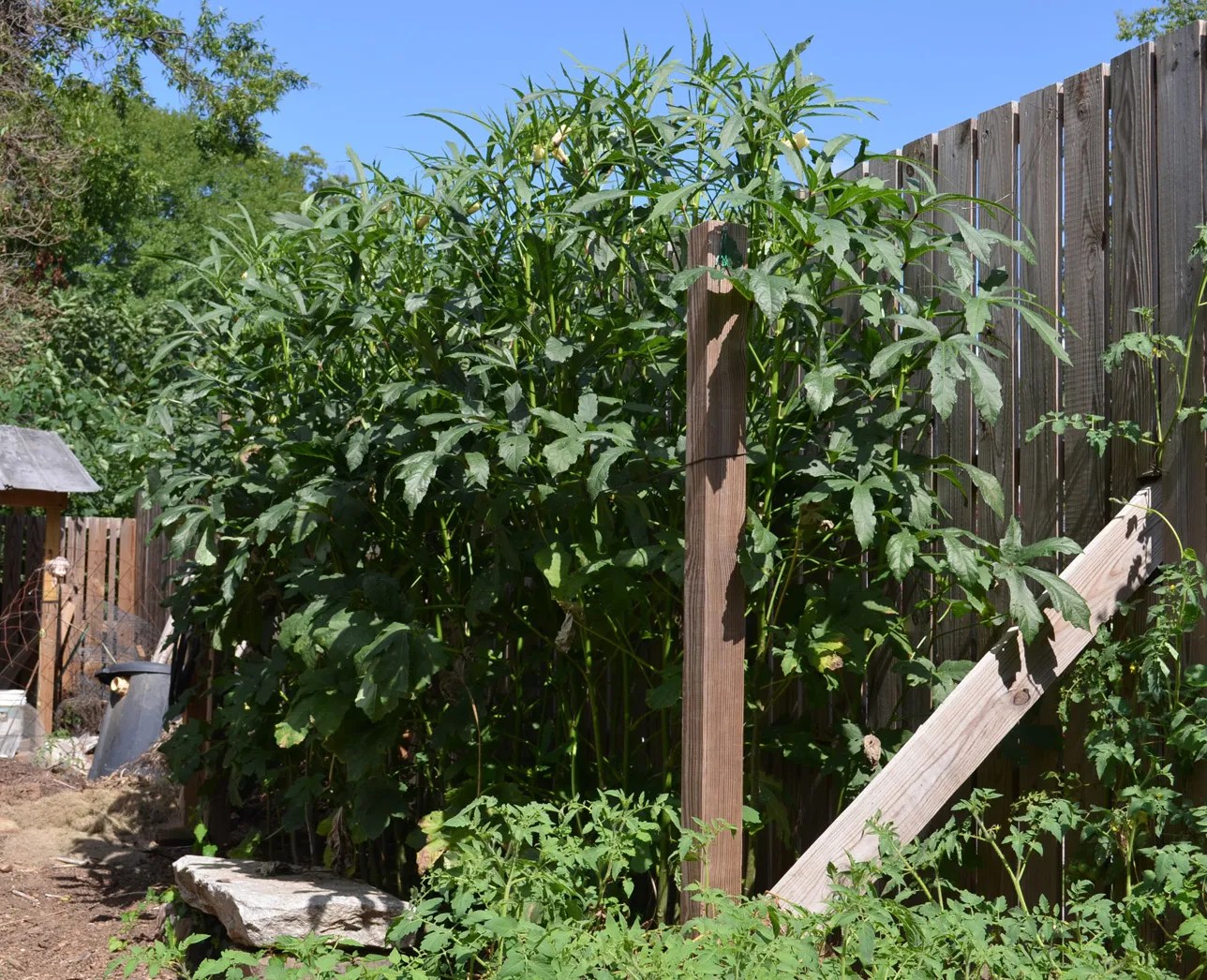
In the back- The okra is really putting out the pods now and is surpassing the 8′ rear fence in height.
The pond was choked with water lettuce, water hyacinth and the nasty algae strings, so I cleaned it out some. Two wheelbarrows of nitrogen laden mulch later :

(The buckets: I rinsed and inspected the roots of everything and all of the algae in order to return snagged toad tadpoles and dragonfly nymphs to the pond).
I could have pulled another two loads easily.

Looking from the back gate over the pond and up the fence line:
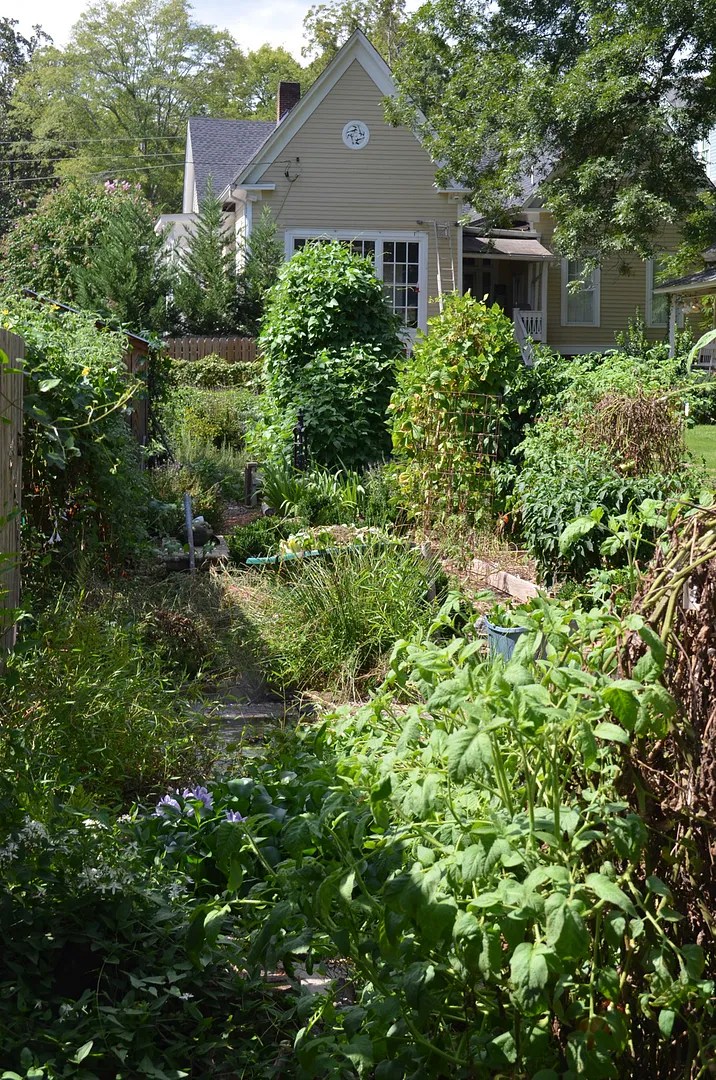
From the outside, there are several escapees visible; tommytoes, volunteer luffa gourds, and further up Carolina Jasmine over volunteer marigolds

Closer views of the gourds reveal some decent specimens coming along.


More of the volunteer gourd vines have escaped to the treeline on the opposite border and are now 15 or 20 fee into two hackberry trees, but I forgot to take that picture (think kudzu with giant zucchini like objects hanging from it).
Funny, I didn’t intend to plant any gourds this year. Tip: drop ANY seeds and you will have gourds.
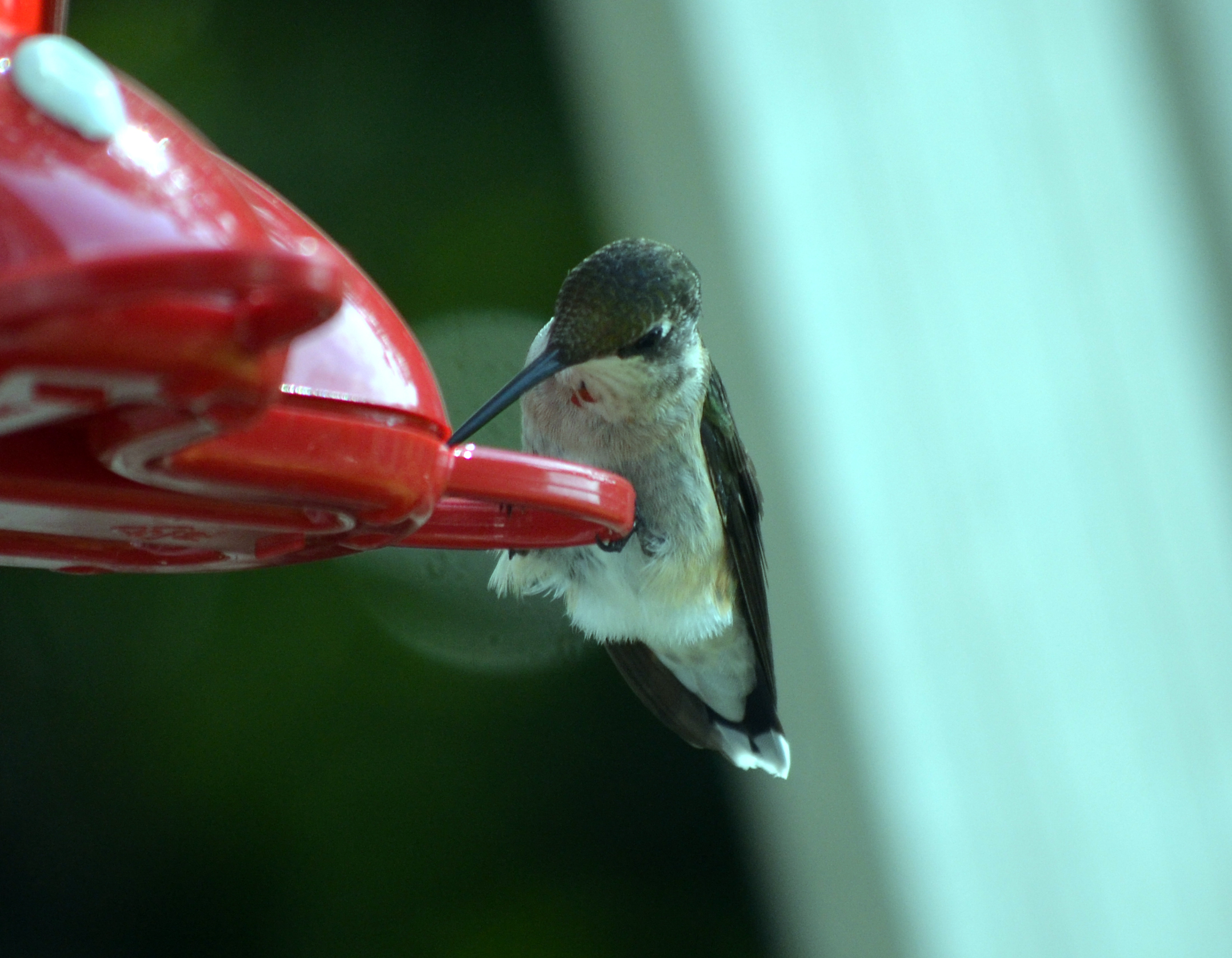
Archilochus colubris – Ruby-Throated Hummingbird
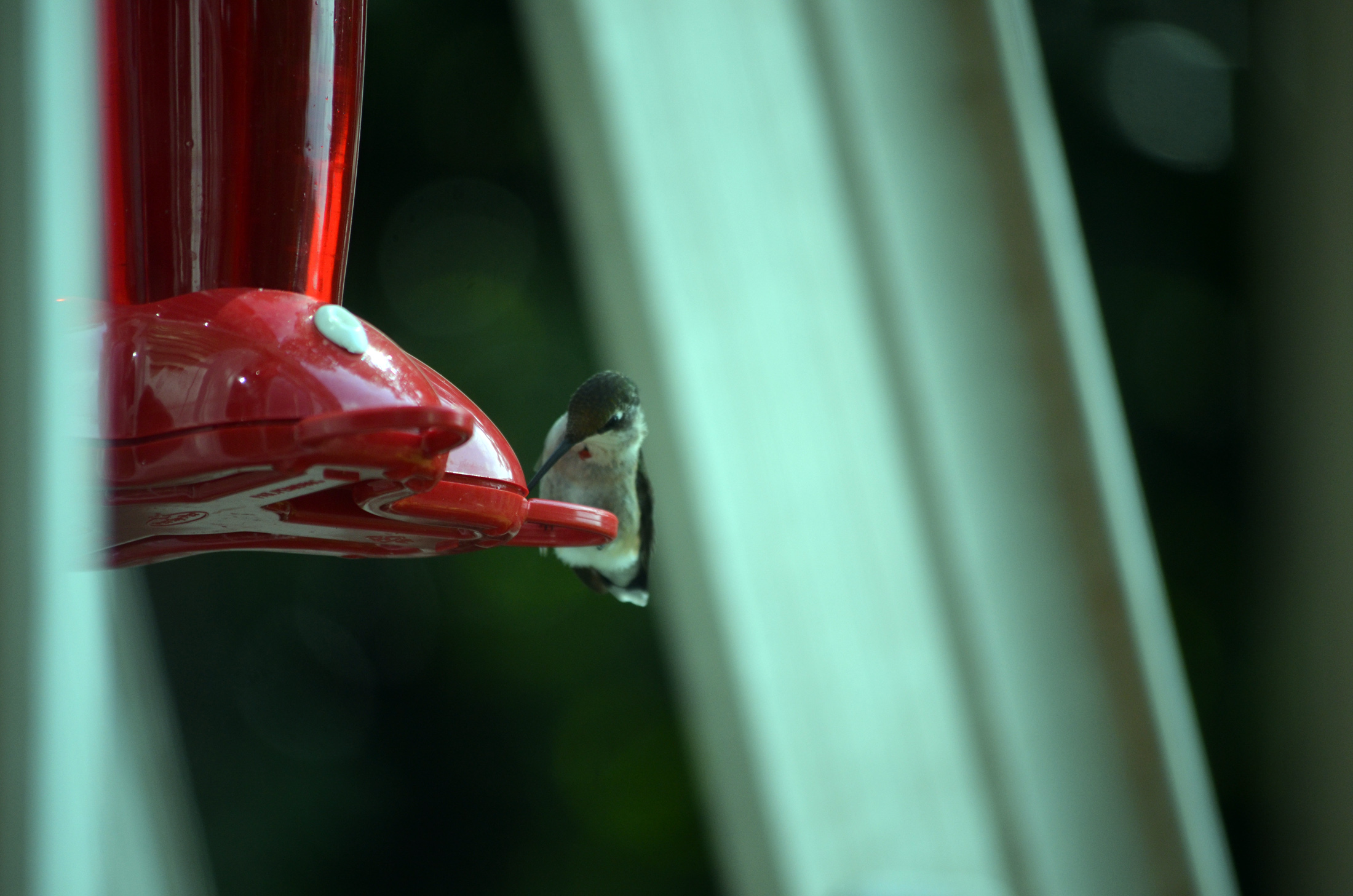
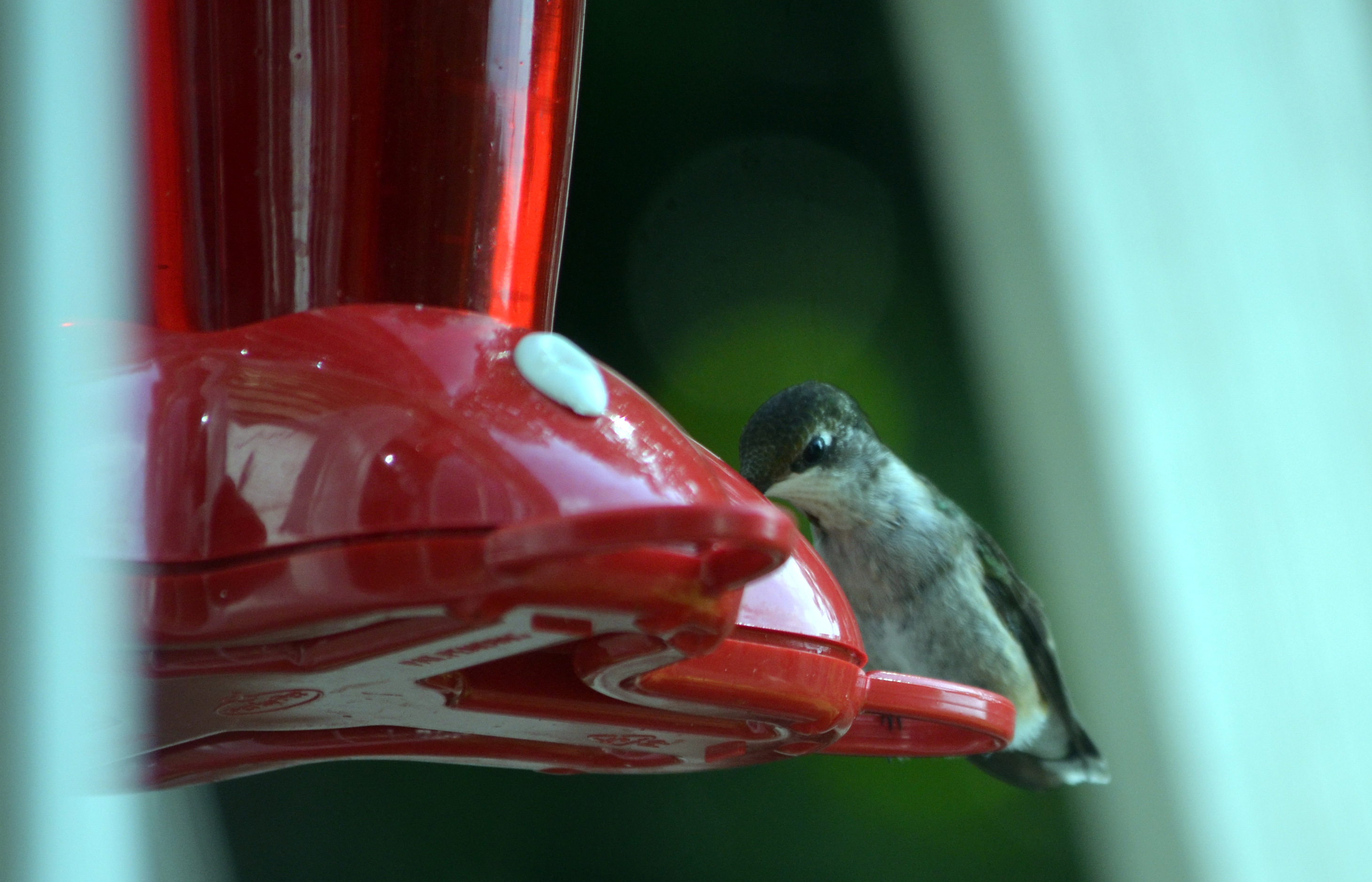
We finally hung a hummingbird feeder a week ago and to our surprise, it was discovered within an hour. As you can see from the pictures below, it happened so quickly I hadn’t even taken the ladder back down yet.
At times there are four or more hummingbirds in the area, usually one guarding the feeder, one who approaches the feeder and is chased off, plus one or more that take advantage of the very temporarily unguarded feeder and quickly snatch a snack to go. Chaos on wings unfolds as this continues until dusk every day, with many squeals, squeaks and high pitched “shrees” attached.
One little guy seems to have staked the primary claim to the feeder. He is seems perpetually perched in the lower branches of the pecan tree 20 feet away, ready to instantly and aggressively run off any approaching interlopers. He tends to stay on the perch drinking longer than any of the others demonstrating the “Possession is 9/10ths of ownership” axiom.
What is he? (And is it a he?)
The answer: It is a male, an immature Ruby-Throated Hummingbird male who is closing in on his first annual molt. They have green backs and “gray-white underpants” as one site explained, plus white tips on their tail feathers. The mature males have vivid ruby feathers covering their entire throat; in August and September the young males “can” get a small ruby spot on their throats just prior to their first molt. The molt replaces 100% of the hummingbirds’ feathers and the full “ruby-izing” of the throat takes place at that time.
At least that’s what the wide-world-inter-web has informed me this morning. Regardless, doing nothing or very little while in a “hummingbird war” induced trance seems to be a good way to pass an hour or two.

Round & Tordu
This basic recipe The Fresh Loaf -Poolish with a tweak or two per loaned “Tartine Bread” formed into a round and a tordu*.
(Click any of the pictures for a larger view.)
First rise in the tupperware
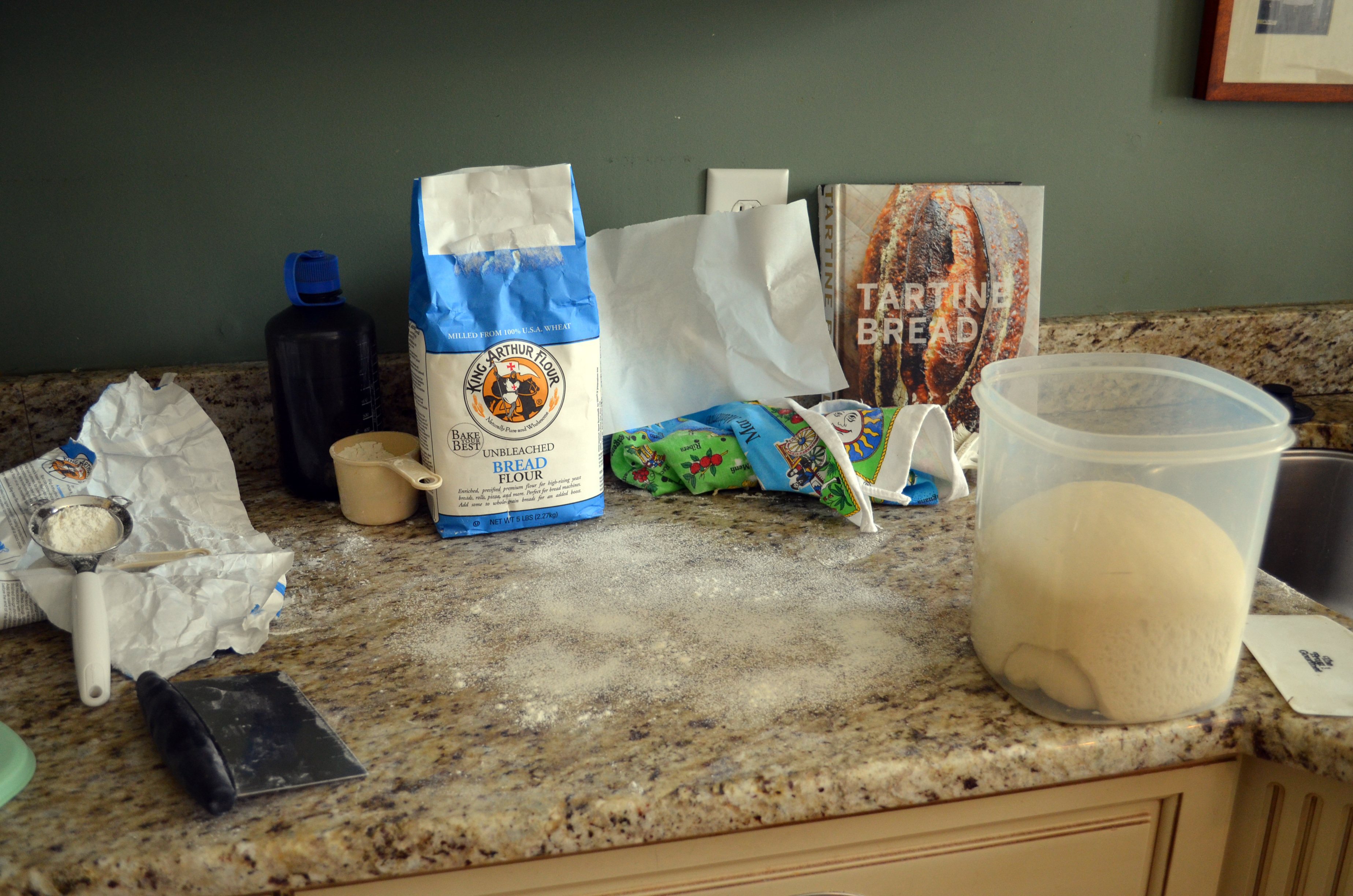

Resting before dividing and forming loaves for second rise:

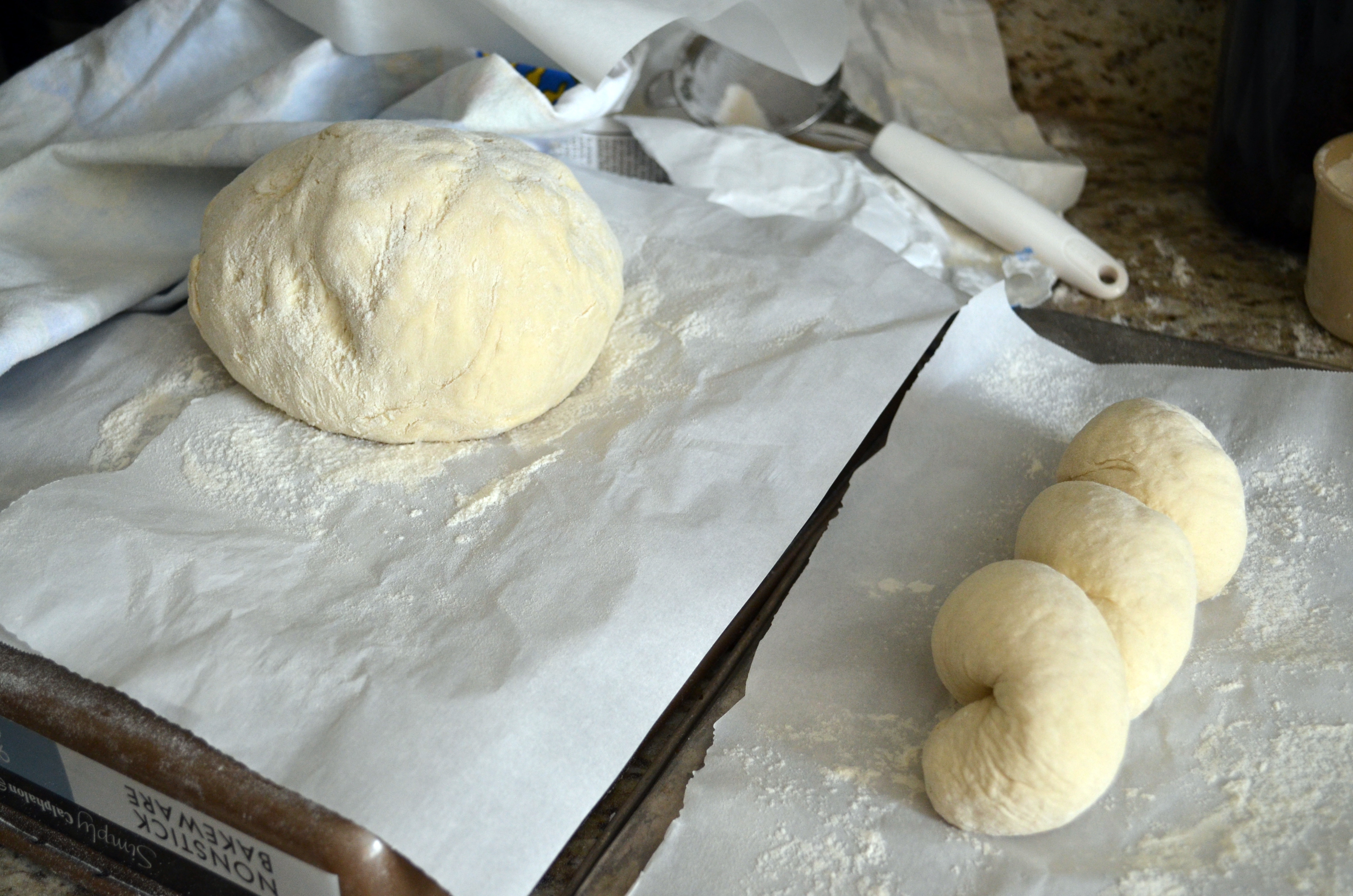
The loaves, a round and a tordu, before covered & left to rise for 1 1/2 – 2 hours. (I was careless forming the round and broke the tension in the gluten strands – hence the stretch marks and leaning rise later.
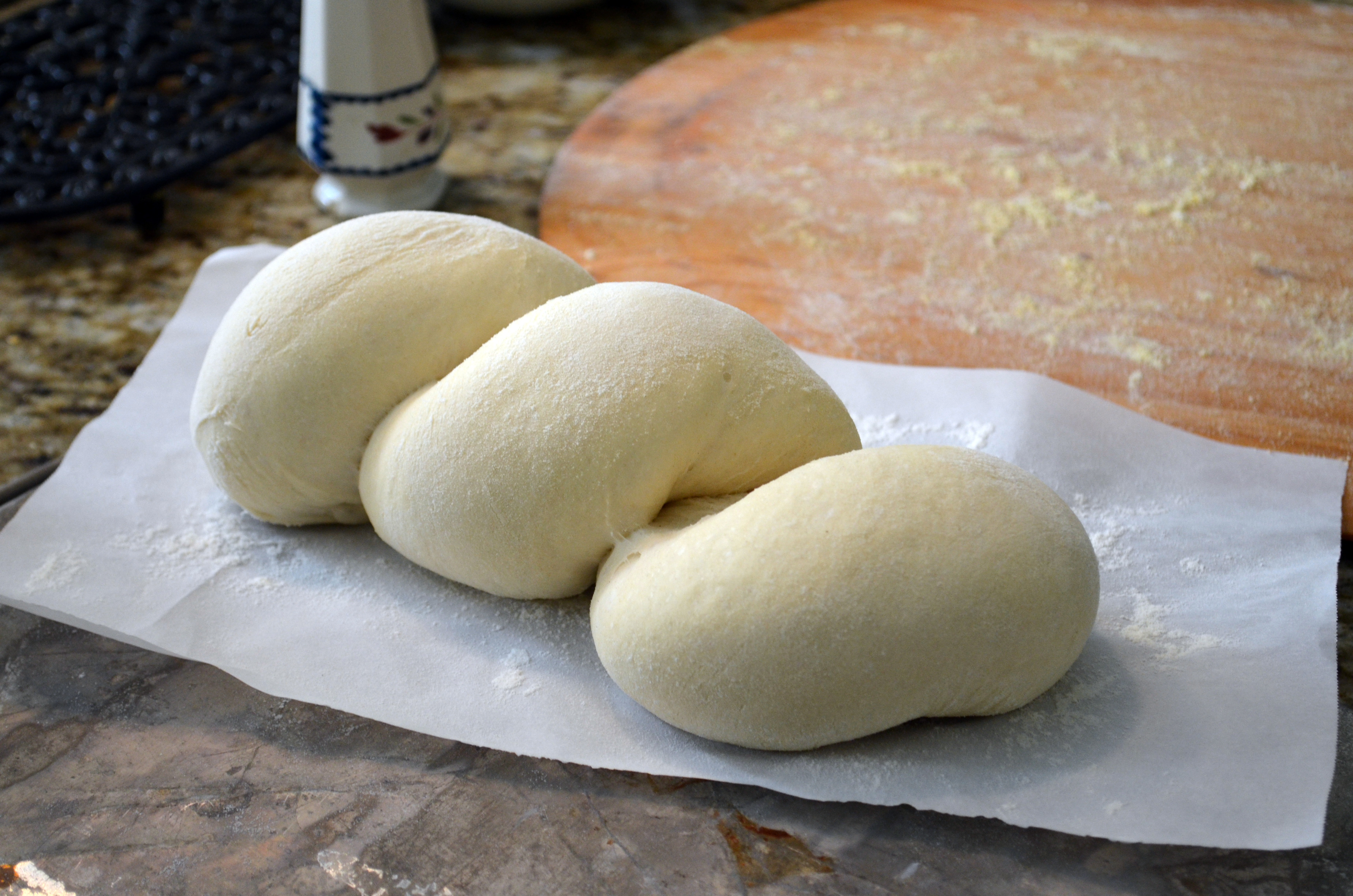
The tordu, belly side up, prior to rolling onto the peel, slashing and sliding onto the hot tiles.
After maybe 10 minutes @ the time a second splash of water is tossed into the oven with the bread. Leaning due to hasty ham handed loaf forming by baker cohutt.

Success, as the finished loaves cool and crack.

* A “tordu”, among other things, is a free standing loaf from dough prepared as for a normal baguette except twisted for “drama” or something. Yes I learned a new word today and had to bake a fresh loaf so I could let the world know. 😉
Status of the Skeeter Nursery
The relatively cool and wet August has brought the mosquito activity to torturous levels at certain times of the day.
Unfortunately, these times are at dawn and then the couple of calm hours before sunset in the evening, which happen to be my only times to get into the garden during the week.
So I head out in the evening with deet cologne wafting along with me; the only real inconvenience is that I can’t deet my eyeballs and the mosquitoes seem to know that.
Sorry for the digression, but you will observe from the pictures the calm, humid, overcast conditions from this evening that made me a walking bag of blood aka mosquito food.
Anyway, the pictures.
Fall is looming and I’ve been prepping beds and planting my fall and winter fare.
These two beds will be covered this year (vs the 3 last year) and I’ll give the lower bed a rest. The short one on the right will be my salad bowl for the next 8 months as well as a host for some kohlrabi and rutabaga.
The one on the left will have kale and brussel sprouts along with the artichoke. (Do you know how absolutely awful a covered bucket of bad tomatoes and other rotting produce smells if you leave it sitting in the yard for 5 days? I do now. I took the top off of the bucket in the picture after snapped this. Barf. Note to self- empty the culling buckets daily.)
And the jalapeno plant will be held over until it freezes.

A few cabbage and broccoli plants are coming along in the middle section; disregard the tired beans, tomatoes and mini-corn that I should have done something with by now).

I just figured out something about my mystery onions. I thought these were from the sets I planted nearby in the spring, but as I type this I have solved a mystery. They grew along with the set onions but never bulbed up. I wondered why, but now I realize these where from the root ends of green bunching onions I used in a gumbo or etoufe last February. No wonder they didn’t bulb, they instead looked like they were going into decline but divided and have perked up substantially this past few weeks.
Duh. So the next time you purchase green onions, cut the root end off with about 1/2 of onion on it and plant them. Yes, they actually will grow back into a full onion then will divide like crazy. For life.

TIP: Plant flat leaf Italian parsley in the fall and let it go to seed in the following spring/summer. Apparently, if you do this, you will NEVER be without parsley again. When I pulled the last of the tired 1-year old plants from a bed, look what was waiting in the shade underneath: One Meelion Parsley babies.

heh…
And finally, in the previous post a spoke of the “bush” varieties of sweet potatoes and how their “vine-less” traits were relative at best.
I rest my case; the lighter leaves are the Porto Rico and the darker purplish leaves are Vardaman:


That’s all. More from mosquitoland soon.
Sweet Potato Test
One of the new things this season was to be sweet potatoes.
I found a sweet potato specialty farm in northwest Tennessee (The Steele Plant Company) that had two types of the “bush” variety, Vardaman and Porto Rico (and yes that is how you spell it in sweet potato circles, or misspell it if you are referring to the Caribbean island).
“Bush” or “vine-less” is a relative term as these have put out runners of maybe 6 -7 feet in every direction. It’s like saying a glowing steel furnace isn’t really that hot compared to say, the surface of the sun or something.
Anyhow a few days ago I counted back to the time I planted the slips and found that the prescribed “days to maturity” had been met (110 days) and decided to probe around and sample a couple.
With my usual logic I pulled them for the next day’s dinner and then researched to see if they needed curing or anything. Yeah, well, they do, at least according to all of the official AG bulletins. Fortunately the initial cure is best done for a week or two @ 80-90 degrees and high humidity, both of which are available in abundance in Georgia in late August. This is supposed the heal up harvest bumps and bruises and also allow creation of the enzymes responsible for forming out the sugars during the initial weeks of storage.
We decided to try one tonight, 10 days after harvest, and cut long wedges out of one of the two sacrificial tubers. The flesh of the sampled Vardaman was firm and a nice orange color as you can see below in the one picture I took:

Olive oil, salt, Rosemary, roasted 16 minutes @400 degrees on convection. Good stuff.
Last night I poked around in the same area of the original grave robbing and pulled this one (also a Vardaman), which was many times larger than the first two, phone included for scale:

(Yikes.)
So do I like sweet potatoes? Probably. Honestly, up to this point I’ve never acquired a craving for them, perhaps due to crossing paths with bad canned sweet potato casseroles topped with mini marshmallows along the way.
I say “probably” because these roasted fries tonight showed me some potential; they were actually pretty good, especially since I had snacked on a tater tot or two or 12 a few minutes earlier (the shame).
Ciabatta
Sunday afternoon of this past weekend was spent mostly in a processing mode indoors (despite the exceptionally mild 86 degree August day).
More soup, more frozen beans, more canned beans, chopped and frozen “soup” carrots (a little to large for fresh eating) and almost split and frozen jalapenos. (OK, not really “almost”, not even started. They remain in the fridge 3 nights later).
As long as I was trashing the kitchen, I tried a new ciabatta topping variation to go with the evening’s fresh tomato soup. (Simple: Butter, garlic, mayo, basil and fresh Parmesan.) I had to use a spare ciabatta loaf from the freezer (oops, someone forgot to bring out the bigo in time to finish making fresh loaves for dinner).
Below, the beans and carrots to be cut and blanched before freezing, the peppers that were to be halved and seeded for popper boats, and the ciabatta.

The gooey spread has topped the slices (note this was written as a grill recipe but I decided to roast/ convection /@ 400 for about 6 or 7 minutes instead.)

And the results were droolingly delicious:

So this morning mrs cohutt asked about “that dish I left in the refrigerator”.
Huh? Oh yes, the bigo I parked and forgot about.
Oh that? Yes, please take it out at lunch and let it perk up a bit for finishing the ciabatta tonight. Yes, that’s it, my plan all along. 😉
This was the second attempt (using this recipe) and I will have to say it turned out much better than the quite satisfactory initial attempt.
The air is thick with the aroma of fresh bread in the cohutt household:


 Behind cohutt's fence