Turkeys, Moss and Fiddleheads.
This afternoon I drove up to the mountain property to see what kind of bog plants I could dig and give a chance around the frog puddle pond.
I took my time and rolled the windows down to absorb every bit of this beautiful spring day.
As I pulled up the gate, I was greeted by a small group of turkeys in my neighbor’s field; the hens were taking their time, sauntering up the hill and taking little notice of me as I opened the gate.

Closer:

But this was about raiding the seeping bog areas down between black mud spring sloughs and our little branch, the headwaters of Watson creek.
A couple of years ago I caught some fiddleheads waking up for spring while strolling with my morning coffee. These grow to be huge healthy ferns, the type I hope to see draped over the edge of the pond.
“Fiddleheads”, ferns waking up for the season a few springs ago:

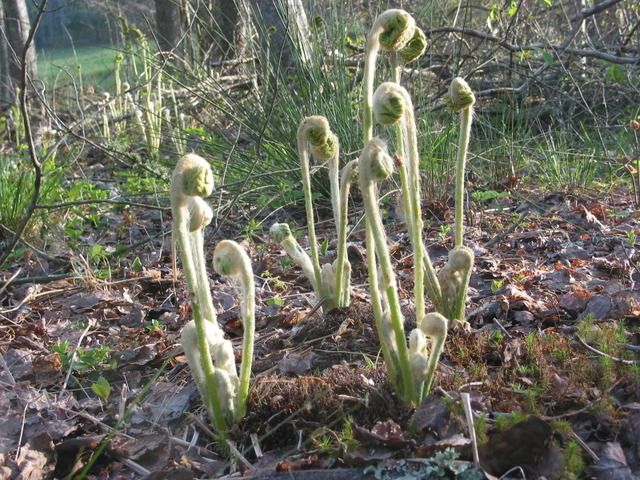

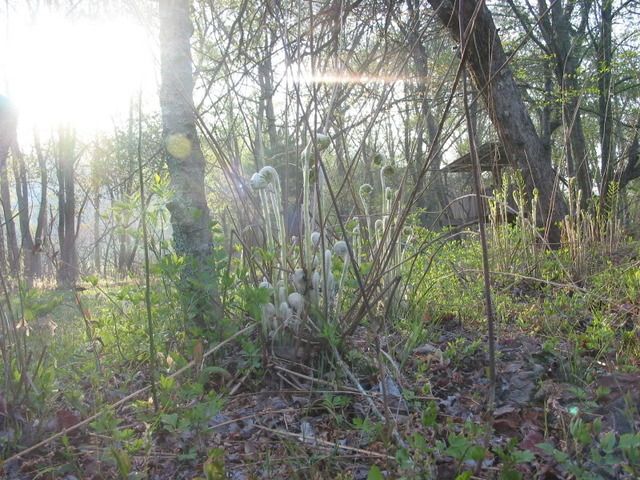
I pulled a few of the fern rhizome clumps- they weren’t out yet, although a few were just in the process of breaking the ground. (The fern rhizome clumps are fairly easy to spot due to the mounds they make once the leaves die back in the winter.) I also cut a couple of “moss mats” from the large patches in the area and 3 other smaller ferns.
This was work, more than I had assumed (surprise). Wet clumps of root in mats 6″ thick were a chore to wrestle out of the bog to the firm ground where my truck was parked. The best way (short of bear hugging the 40+ lbs of organically infused mud) was to impale them on my landscape rake and drag them out. It now looks like someone or something has dragged a body into the bog for disposal; too bad my nephew Nick’s Cub Scout troop has already had their camp out there, otherwise this would make a great prop for a campfire ghost story.
At the gate, there is an immense sea of wild hosta, or “feral” perhaps would be a better term since they likely are reseeding from “domestic” plants placed there sometime 20 or 30 years ago. The new growth was barely breaking the surface and I dug a couple of clumps for the experiment factor or it all. No picture from today, but a couple of summers ago I did take a picture of this massive sea of hosta:

(I wasn’t exaggerating was I)
On the way out the hens were on the narrow gravel road and politely move into the woods so that I could pass. At closer ranges the red of their head and throat is much more apparent:

I came home and arranged some of the “plants”; it just looks like a mud hole right now although the plants collectively should break dormancy soon.

I almost forgot the moss; it (along with the baby hosta) is heeled in waiting for me to figure out where it goes:

That’s pretty much it for now. (One day I might remember to take a daytime shot or two of the pond so that it is actually visible….)
March Heat
If it can be almost 100 for several days in late September than I don’t know why I should be surprised that it will be in the 80s through next Wednesday. This will be a full week with highs between 81 and 85, a full 20 degrees above the historical mean high temperatures for this week of 63/64.
Even with the door and window open and a fan forcing some air though the hoop house, the temperature inside was approaching 100 degrees an hour after the sun broke through the clouds this afternoon. This is not particularly good for things like spinach, lettuce, kale and brussel sprouts.
With the generally accepted “last frost date” for my area still almost 4 weeks off I don’t want to take down the hoop house yet but another 4 days of this would cook things off beyond recovery.
I decided remove the clips securing the plastic on both ends and open things up some more. This helped a good bit, but I sure wish I had ordered the shade cloth I was considering a few months ago.
This looks really good, doesn’t it? 😦

The consolation is that my tomato seedlings should get a real boost from the 5 days out in the hoop house.
Tomorrow: A quick trip to the mountain property to raid the bogs.
Amphibian pond. Really.
I hate slugs.
I hate snails.
Land mollusks. Yuk.
Apparently my backyard has the right conditions to sustain a healthy population and periodically they take over sections of the beds.
They seem to like the same produce that we like- go figure…..
I know about the beer traps, but that’s a lot of beer to set out every night and I would only be slowing down the assault, not eliminating it. I’d probably end up with a tipsy poodle and drunken kittehs anyway….
I have used the enviro-friendly / pet-safe yeast baits. They seem to work but they are not cheap when you consider that they have to be “reapplied” every couple of weeks. In fact I just received a more “bulk” container of this from Amazon yesterday(a few pounds worth vs the puny Parmesan cheese type dispenser ones).
I won’t consider the Ortho industrial slug poison even though it probably would wipe the population out. I really don’t trust the unintended consequences of a heavy application of this type of thing, especially since there are all sorts of pet warnings on the label (not in the fine print even, but a big graphic built into the packaging design.
I’m sure that the presence of these little slimy villains fulfills some beneficial function although I can’t put a top ten list together for the positive contributions that slugs and snails provide to my little ecosystem.
Enough of this slug-talk, as you now understand the twisted logic I used to justify the installation of the pet project I really wanted – a frog pond.
Frogs and toads are the anti-slug; they are ferocious nocturnal terminators of all things mollusk that creep out from under things at night to eat my lettuce, spinach, cabbage, artichokes and as mentioned earlier, just about everything we like to grow and eat. With the right habitat for toads frogs and other amphibians, eventually my slug and snail population will be reduced and held in balance, with no poison or drunken animals on the property.
Life would be so simple if I just made little 30 gallon puddle pond, but it should surprise no one that I just can’t; I have an overkill reputation to live up to now…
The plan is a frog pond with enough surface area to also attract things like dragonflies, beneficial predators in their own right. The edges will have some integrated bog garden strips alongside. The large flat shale rock piles I accumulated will be moved and arranged as edging and a series of palatial toad condos (no flower pot hovels for my toads). A deep hiding-hole will be in one corner across from a shallow gradually sloped bank on the other side for easy exit and entry.
Pretty absurd eh?
So far, after two evenings with a shovel, I have a big hole that is lined and filled with water, and a second overflow basin adjacent that has been filled with soil and substantial helpings of peat moss since these pictures were taken. About half of the edges are graded appropriately now and this weekend I should be able to finish then haul the rest of the edge rocks the 40 feet or so down to the area to both hide and hold the liner edge.
From the front, note the bog garden slough being formed adjacent to the fence and the two large gut splitting rocks on the hoop house bank moved there by this creaky middle aged man:

And from behind:

More to follow, of course.
Garden factiods, illustrated version
Did you know that you can pull year old chard plants from the ground for dinner (and to make room for artichokes), then change your mind and plunk them back into the dirt (closer to the kitchen no less) for another day? They wilt a bit but don’t seem to mind much.

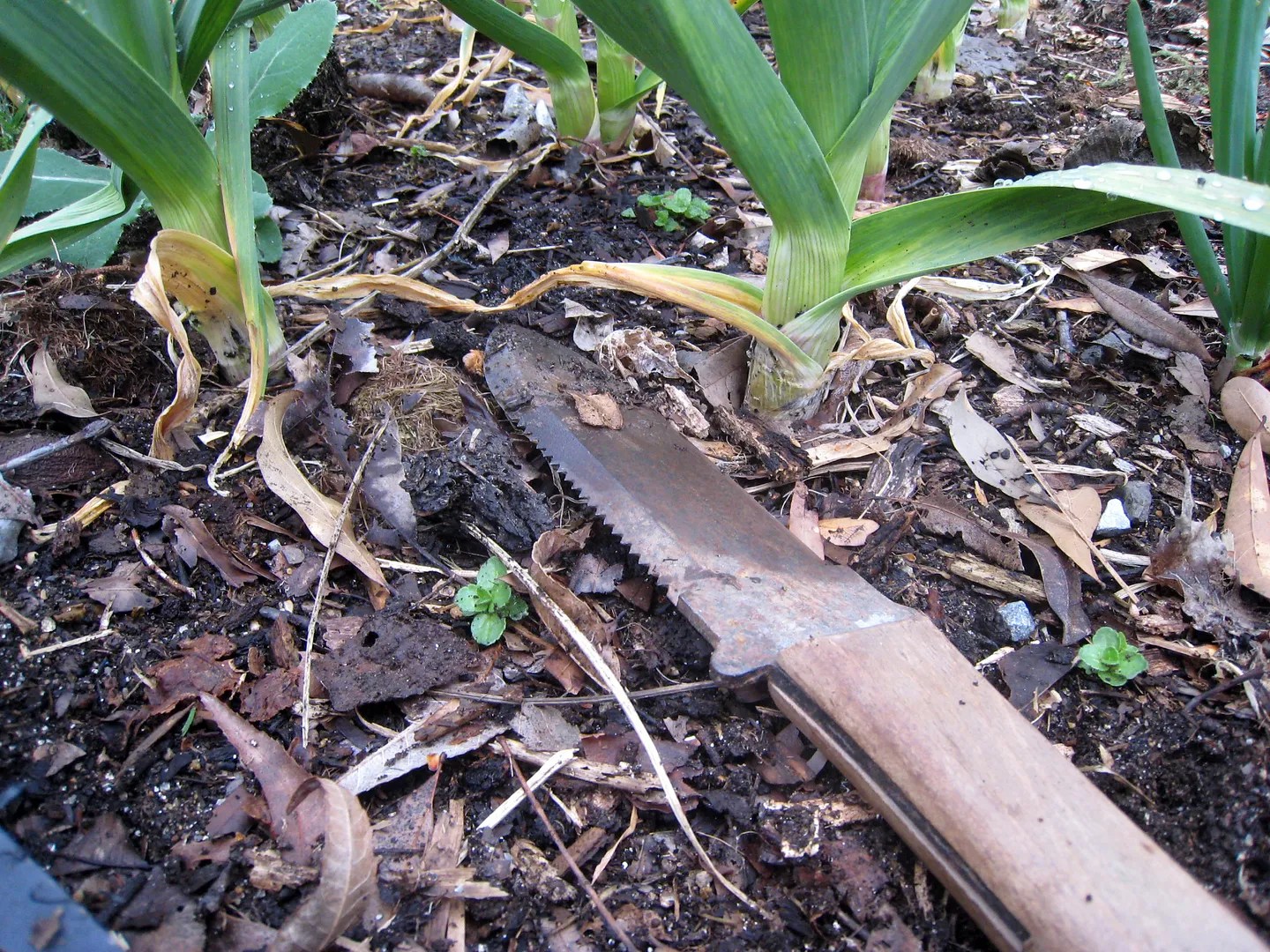
Did you know that weeding around the base of garlic plants in still, humid air creates the most fantastic garlic aroma you could ever imagine? And did you know a Japanese Hori-Hori garden implement is quite useful to shave off those weeds just at the soil line so that they don’t disturb the garlic roots too much?
Did you know that basic wellingtons, aka “wellies” aka “zartic boots*” are indispensible when transplanting and watering in English boxwoods during a wet spring week?

Did you know water droplets on red Russian kale can make your mouth water sometimes?

Seriously:

*“Zartic boots” is the description some of my local peers pinned on the big waterproof wellingtons, as a now closed chicken processing plant’s miniature immigrant Guatemalan workers for years could be seen walking to and from work along the thoroughfares on the west side of town in yellow rain slicker pants and the knee high boots. (Not a pretty picture when you think about it is it?)
What’s that on the horizon?
The (f)ugly metal building that can be seen over the fence in the back reaches of my garden has been slowly but steadily disintegrating over the 25 years I have been observing it from my back window. It is a back add-on to the buildings of a plumbing supply outfit that operates on the commercial thoroughfare that runs perpendicular to my street (obviously just a half a block away).
It has become increasingly noisy over the last couple of years as more parts of the rusting metal roof started to pull away; the particularly stormy stretches we’ve been through in the last 12 months have taken their toll at an accelerating pace. I’ve been cleaning up pieces that have blown loose lately and stowing them behind a shed for possible use on future shed projects (you might recall the “surplus” roofing material used in the bathouse project 😉 )
This weekend I noticed something looked different on the horizon and discovered that a large section of the building had collapsed:
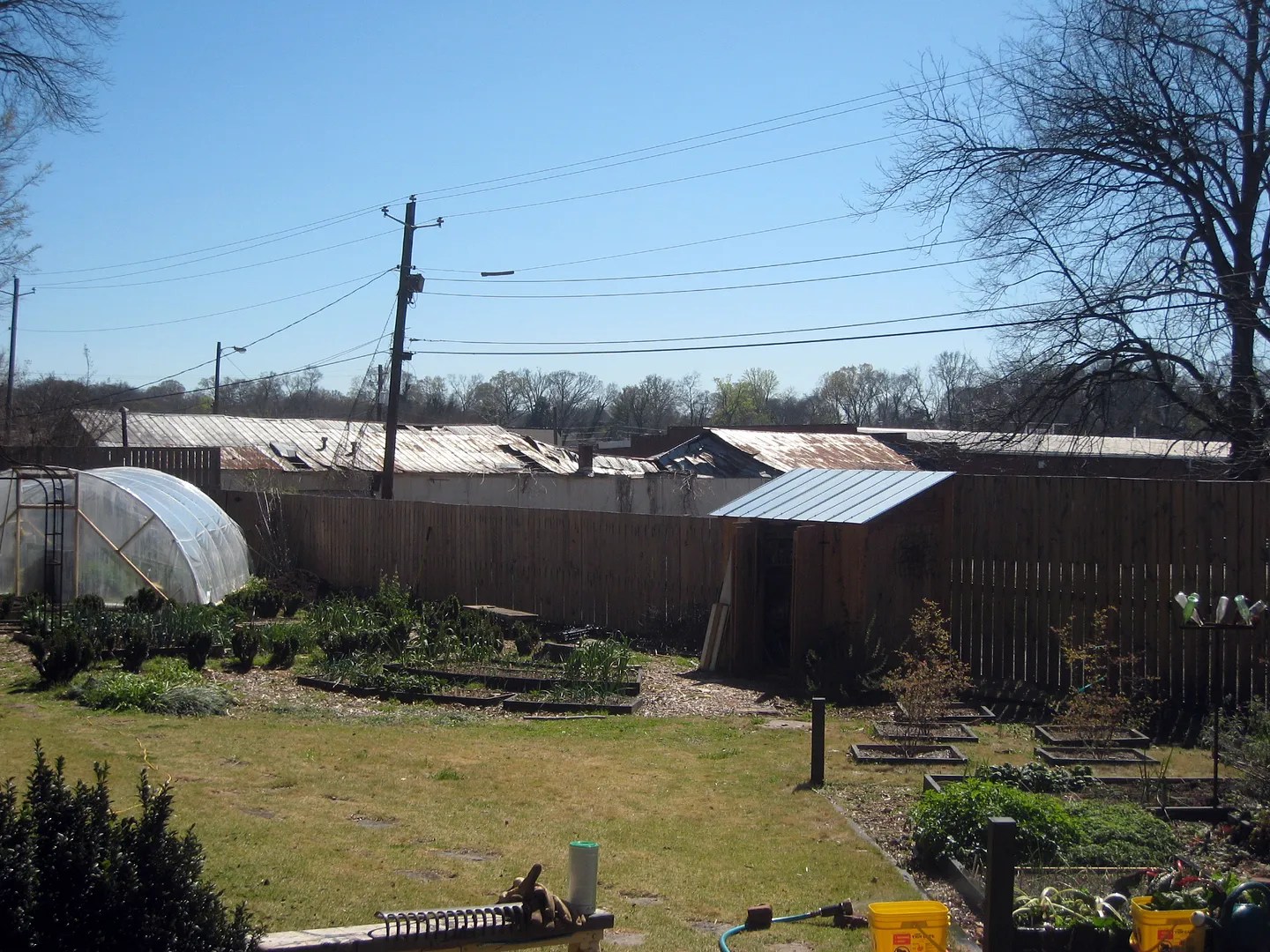
It is actually much worse than this angle suggests; most of the section on the far side of the ridge line is at least partially down. Nothing was being warehoused in the building as far as I can tell and now the building inspector will undoubtedly force the owner to do what should have been done several years ago and remove the structure’s remains.
An odd coincidence:
The main structure we can now see on the hill visible through the new gap is a home that mrs cohutt and I considered purchasing 26+ years ago when we moved back to town:
This grainy zoom makes it a little more visible, the taller roof in the trees just over and to the right of the chimney:

It also happens to be 3 or 4 doors up from the home may father grew up in; it is very close yet a river and a shopping center are in between (not to mention the heap of rotten wood and rusted metal closest to me).
(For locals: the house in the trees is on River Avenue in the small Oakdene historic district)
That’s all for this post- I promise to get back to gardening subjects again shortly.
Georgia Artichokes
Two seasons ago I tried to grow artichokes from seed here in N GA. The seeds are difficult to germinate and my choice of location was a bad one (a Tommy-Toe plant from hell smothered them both).
End result: 1 puny artichoke and a frozen root crown (aka a dead artichoke plant) in the cold winter than followed.
I saw that the crowns can be dug and shipped early in the spring in order to get a jump on production so I decided to give it a shot again. One of my favorite suppliers, Peaceful Valley Farm & GArden Supply, aka Groworganic.com had the crowns listed as a seasonal item when I noticed them last fall. Unfortunately this winter I waited too late to order and Peaceful Valley was out, so I thought I had missed out again this year.
A few weeks ago I found a boutique grower of artichoke plants (The Sweetheart Artichoke Company) who had some 2nd year crowns for sale. She seemed a bit off the wall (artichoke crazy really) but quite knowledgeable, so I immediately liked the idea of ordering from her. In some businesses this is a red flag but my experience with garden type people it is actually the opposite; the more obsessed they are with their specialty “crops” the better. This worked with Onalee’s last year with my lufa gourd seeds, so why not give Gail @ Sweetheart Artichokes a chance this year?
So I ordered two for the whopping price of $16 and forgot about them until last week when an odd triangular box arrived.

Upon opening it, I discovered two live artichoke plants ready for prepping and getting into the ground:

I had some work to do before the space was ready.
My plan is to place one in the northern end of one of the big beds in the way back that I plan to cover with a hoop house again next year for freeze insurance. The second will go into a new bed up front near the raspberries. In the meantime Gail (Ms Sweetheart Artichokes) emailed me very specific instructions and referred me to the informational section of her website.
I prepped the plants in potting soil and put them in a sheltered location (the long ladder shed) for a week or so of acclamation. It is sheltered from the wind but well vented and the floor doesn’t get much in the way of direct sunlight through the clearish roof panels.

The bed is complete now but for some reason I missed the opportunity to photograph it. The foot print is visible in the picture below (of the large Rosemary bush I transplanted recently, but that story is another post for another day):

I dug it out a bit including a deeper clay and churt busting basin where I will plant the artichoke. I replenished this basin with some of the original soil plus a mix of composted manure and bonemeal. The wide end of the bed is where the ‘choke with go; the narrower end will catch something complementary. In case anyone is wondering, the bed is being moved from outside the fence (used in prior years for garlic and lettuce) and modified to fit this angled setting. There was a shade issue in the summer where the bed was, plus on two occasions someone walking down the alley pulled up garlic plants just to see what they were. (Who does that kind of thing??????)
We’ll see, maybe this year will be better. Maybe my new best artichoke friend Gail will chime in. 😉
Suspicions confirmed
Unusual behavior often provides clues to an underlying problem, one perhaps not immediately obvious to those around.
A kitteh has certain classic responsibilities in a home garden; the primary is to patrol and keep at bay all of the local SAMs (“Satanic Agents of Mayhem”, aka tree rats, bushy tailed rodents, plus the more common name “squirrel”).
This is an instinct that is so burned into the DNA of any cat that when it doesn’t rise to the surface, once can be assured something has gone wrong, perhaps very wrong.
Yesterday, I once again had to step over the monster kitteh in order to shoo away one of the above mentioned vermin from the back of the yard. Monster’s behavior was unusual, especially for a cat on a sunny spring day when the area around was filled with all sorts of critters and birds moving about without concern for the “predator” on the patio. Maybe they knew something we didn’t……
Fearing the need for an intervention of sorts, I watched from a distance then set up a hidden camera in a quest for the truth (the investigative reporters of the television network’s Atlanta affiliates wouldn’t return our calls):
We documented acute feline lethargy:
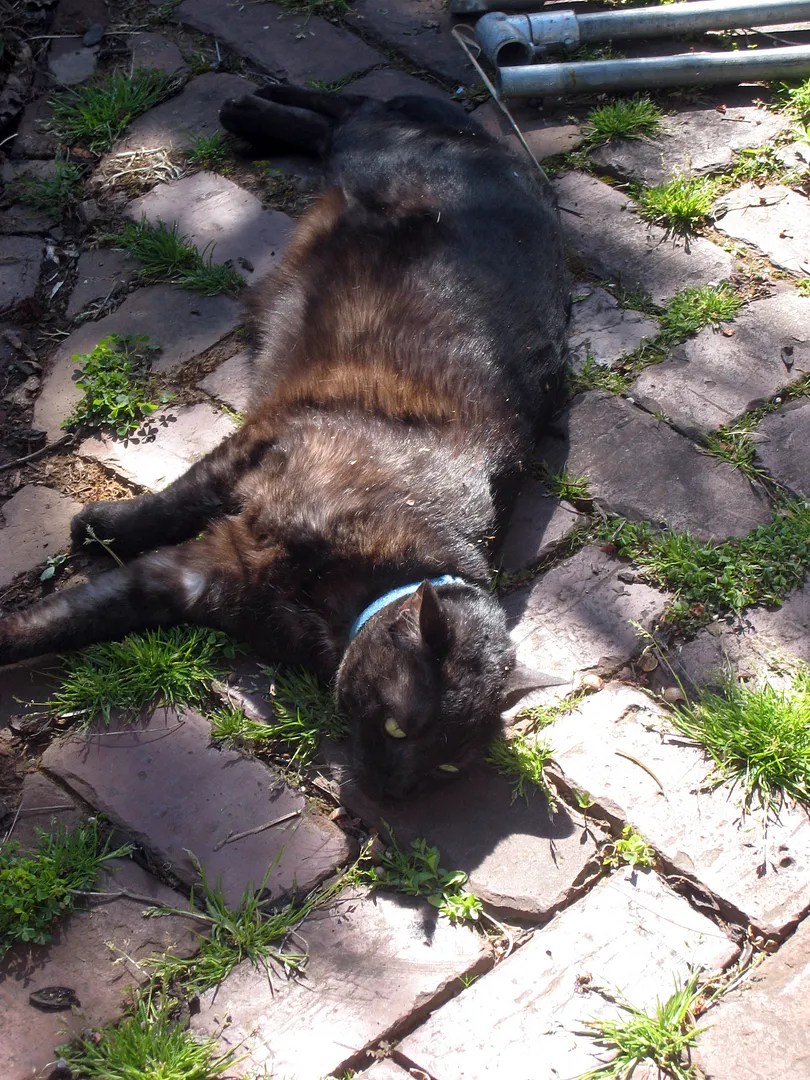
We also captured episodes of irrationally gleeful rolls about on the patio, mostly with the monster on his back:

Had this been a dog, all would be accepted as normal. But this is a monstrous 20 lb. kitteh, the alleged “king of the beasts (domesticated version), a supposed cold calculating primal feline predator, independent and always in the “instincts on” mode.
With patience, one can always discover the truth. We knew this kitteh is a catnip junkie in the warmer weather; he pesters me any time I am in the yard for a quick “fix” of fresh catnip leaves. Oddly, he has never shown any interest in the catnip bed itself.
Until now.
The catnip is coming back strongly after the mild winter and it would appear that the catnip-stoned-monster-kitteh is now going directly to the source. We have evidence:

God help us all.
Seed starting: tomatoes and peppers
The method I use for starting tomatoes and peppers from seed is as follows:
1. Put an inch or so of vermiculite in a container
2. Sprinkle seeds over the vermiculite
3. Add water- keep moist but not waterlogged
4. Place container in 80 degree environment of some sort for a few days, keeping moist.
In a few days you have this, a tupperware full of healthy tomato seedlings (Brandywine in this case)

Prepare a starting mix (peat+ compost+ perlite will do) or purchase a mix I have done both; this year I splurged an picked up a 3cu ft (compressed) bale of Promix, a commercial mix, for around $26. This may not sound like a good deal but it is, I promise. Two puny bags of Miracle Grow cost the same; this is 6 cubic ft of sterile mix with volume of maybe a dozen or two of the little Miracle grow bags.
At this point fill your plastic pots, peat pots, yogurt containers and let them soak up water overnight (from the bottom up). I generally use soil cubes/blocks now; I have found they promote a root system that allows quick adaptation of the plant once moved to the garden.
Pull a sprout (or a punch of them) out of the vermiculite (lift the plants from below using a spoon or knife.)
A clump of Branywines ready to go into the coil cubes they are resting upon:

After I carefully deposit a sprout into each block I generally “backfill” with vermiculite or fresh dampened peat; the Cherokee Purple on the right are “tucked in” using vermiculite, the row of leaning Brandywines to the left aren’t yet :

Label well and return to the warm mat under the lights:


In a week or so the seedlings will have adapted and started growing, like these recently transplanted peppers:

These will be ready to move to the raised beds in about 5 or 6 weeks; the peppers will go out a week or so after the tomatoes.
Tip: I use large straight forceps, ie giant tweezers, to pinch out the center of the pot of sil cube so that the dedicate little “hair” roots can easily fit.
Cold moon brings out the haints
Our frost/freeze “safe” day here in N GA typically has been after Easter or The Masters golf tournament, usually sometime around the 2nd week of April.
In 2011 it was March 12.
In 2010 it was March 8.
We have a hard freeze in the forecast tonight (March 5) with a lows predicted between 27 and 29 depending on who you listen to…
Normally this wouldn’t be an issue as I have learned not to push things by putting out transplants out too early. However, I have no control over the interaction between my blueberry plants and the mild winter thus far and that is the subject of this post.
Rabbiteye blueberries are fairly hardy, although a long “indian summer” aka mild winter can induce early blooming. Early blooming raises the risk of damage since the blossoms aren’t as hardy the rest of the plant as they are opening.
Problem 1: Temperature. 27-29 can be enough to damage under certain conditions. See problems 2 & 3.
Problem 2: Wind. Modest wind is good, negligible or the absence of any wind is bad. Although it seems backwards still air can create a situation where the cooler air pools around the plants and small cold “micro climates” are created. Note: If overhead irrigation is used the opposite is true- wind means evaporation, sprinkler moisture evaporates rapidly and lowers the temperatures.
Problem 3: Dewpoint. Low dewpoint = worse than high dewpoint, since drier air means more evaporation which means exaggerated effect of low temps. What is a low dewpoint in this application? lower than the temperature by a few degrees.
So-
Problem 1: Borderline temps +
Problem 2 – Virtually no wind tonight +
Problem 3- a dewpoint under 20 tonight =
any early blueberry flowers on my bushes are likely screwed without some action.
Do I have flowers? Yes, 4 of the 6 bushes have enough flowers to worry me:

Enter plan B: Agribon row cover

(I’m glad I bought the big roll now instead of the 50′ section)
I cut 4 sections out and covered the 4 at risk bushes, which leads me to the “haints” referenced in the post title.
What is a haint? The urban dictionary offers a pretty good explanation here. (note: I’m not the entries referring to scary women this time.)
For those of you who didn’t follow the link and aren’t sure, a “haint” is southern version of “haunt” which is also used to describer a “ghost”. Yes, redneck and rural african american ghosts, that’s what haints are.
So, are you ready to see the haints?
First, some proper ambiance courtesy of this evening’s moon:

(Drumroll…….)
Haints:


Our OCD toy poodle wasn’t really keen on the haints appearing out of nowhere this evening; he kept a wary eye on them and maintained a low growl just now as he went out for his evening relief. Why not, he obviously knows what haints are.

 Behind cohutt's fence