Another Mutant?
Disclaimer: I’ve never seen this before, but given my limited experience with sweet potatoes it doesn’t mean it is abnormal.
I believe that sweet potato vines are second only to gourd vines in their quest for geographical coverage and control. They seem pretty good at it too, sprawling in every direction and putting down an extra moisture seeking root every foot or two along each spur.
However, one of my vines seems to have mutated into a Siamese quintuplet or something, from a two lane country road into a multi-lane urban super highway.
This:
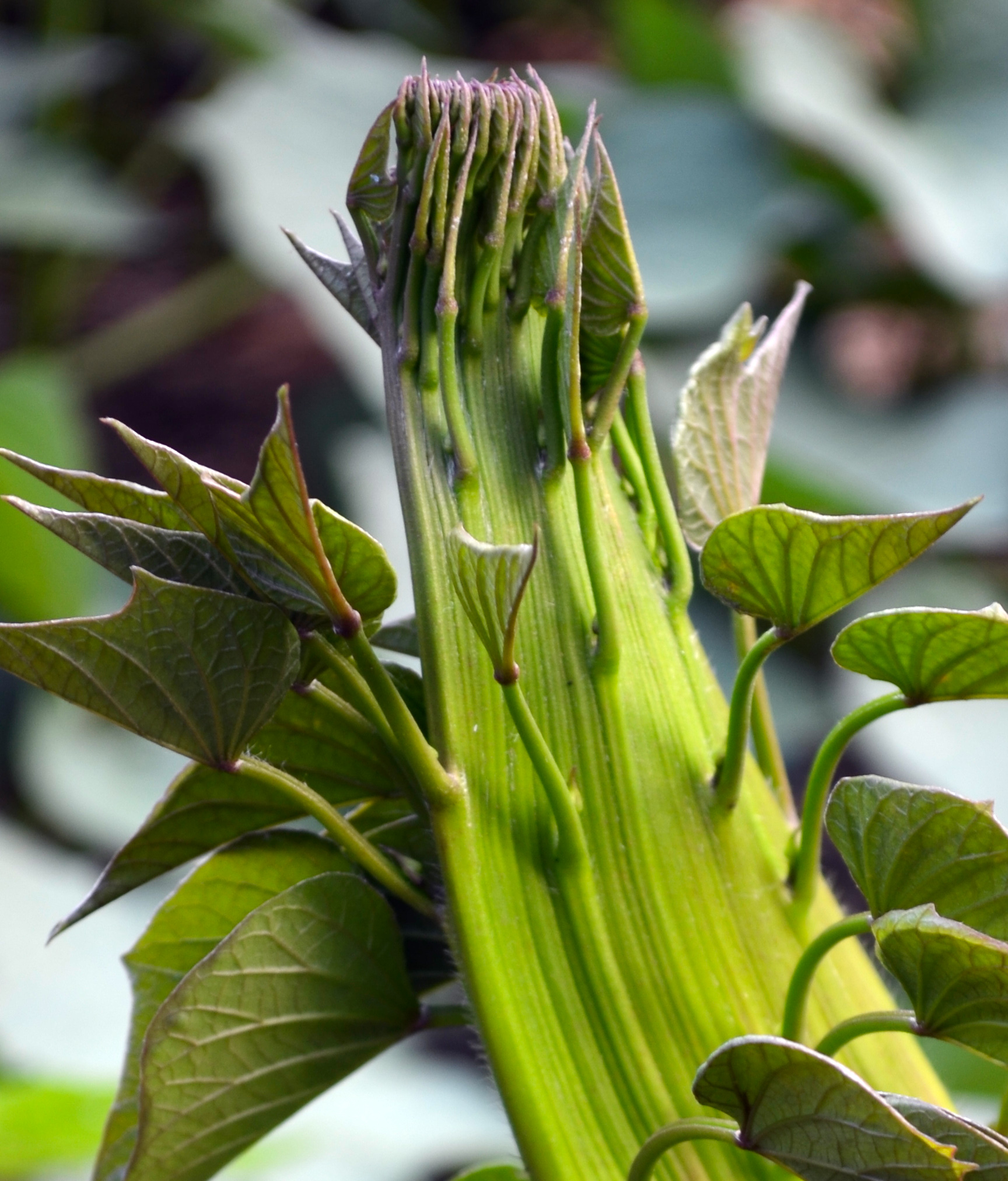
Beauregard sweet potato vine tip. what?
This reminds me of the 40 pin serial hard drive connectors inside my older PCS. Go figure.
The type is “Beauregard” and one test harvest reveals that it is good for a substantial yield; one 4’x1′ hill was good for about 15 lbs of tubers.
The same, from a little further back:

That’s all, I just wanted to share this “head-scratcher”.
Finally
Not the most captivating post that has ever been posted here but…..
With much “encouragement” from mrs cohutt, today I finally fixed a storage issue.
Over the last few years we have accumulated quite a Ball canning jars as the tomato production really ramped up. The empty ones sort of found their way back into the broom cabinet on the back porch and were “loosely” organized to say the least:

Not the way to do this
Today it was so impossibly hot and humid (always with a looming thunderstorm) that I gave up on any heavy lifting projects out back and decided to tack care of this issue.

Much better
Done.
Yay.
Fooled
By now in most Georgia Augusts, we would have been in our second or third week of oppressively hot & humid “Dog Days”. The usual effect on the garden is that everything wilts a bit and basically shuts down until the nights start cooling off again in September. The typical summer garden staples like tomatoes, peppers and beans can’t even avoid this; even though the plants seem to sustain themselves fairly well, the pollination process ceases and production stops (the heat breaks down the pollen too fast and it is rendered sterile, or something like that).
But this year August has been, uh, unusual?
We had stretch a week ago where the highs barely got into the mid 70s. This is a far cry from 98, 99, 100 with air as thick as a wet wool sock. I wouldn’t go so far as to claim that every August day has been “comfortable” @ 3:00 PM, but relatively speaking things has been unusually tolerable.
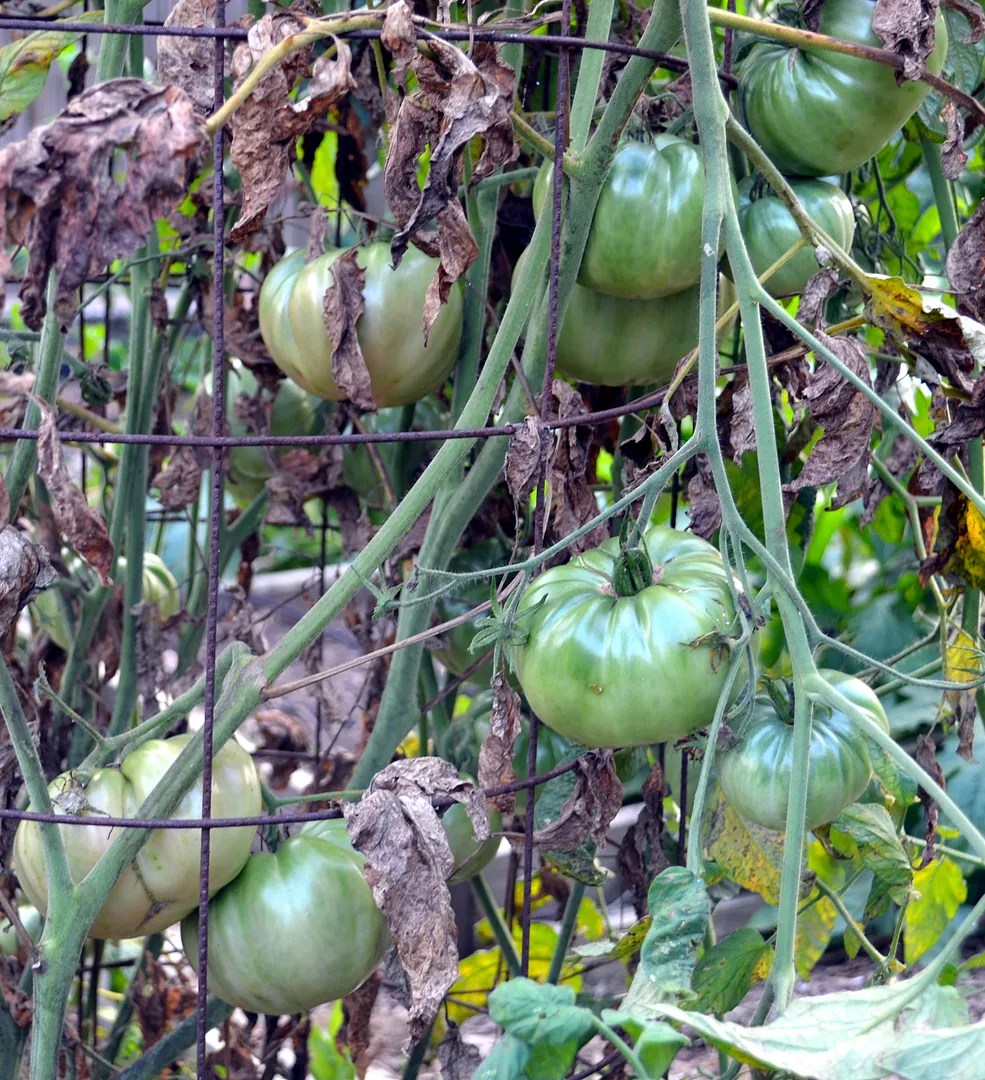
Despite the ratty looking foliage on most of my tomato plants (a wet summer has allowed mostly nuisance foliage conditions to thrive more so than the normal), they have ramped up production (again) significantly. For example, this Brandywine seems to have more large green tomatoes on it than it does leaves:
The by the end of July, the Asian long bean vines had valiantly produced themselves into tired looking tangles that appeared to be in their final stages before expiring for the season. This is my first year for these and I had come to the conclusion that the 10,000 feet or so of beans these few plants had already provided us would be it for the year. Apparently this write off was way way premature. Like the Brandywine plant above, these vines seem to covered with substantially more beans than leaves.


It would appear that the fall flush of production is upon me and we still have a week of August remaining. Time to buy more canning supplies and freezer bags I guess. 🙂
Tomato
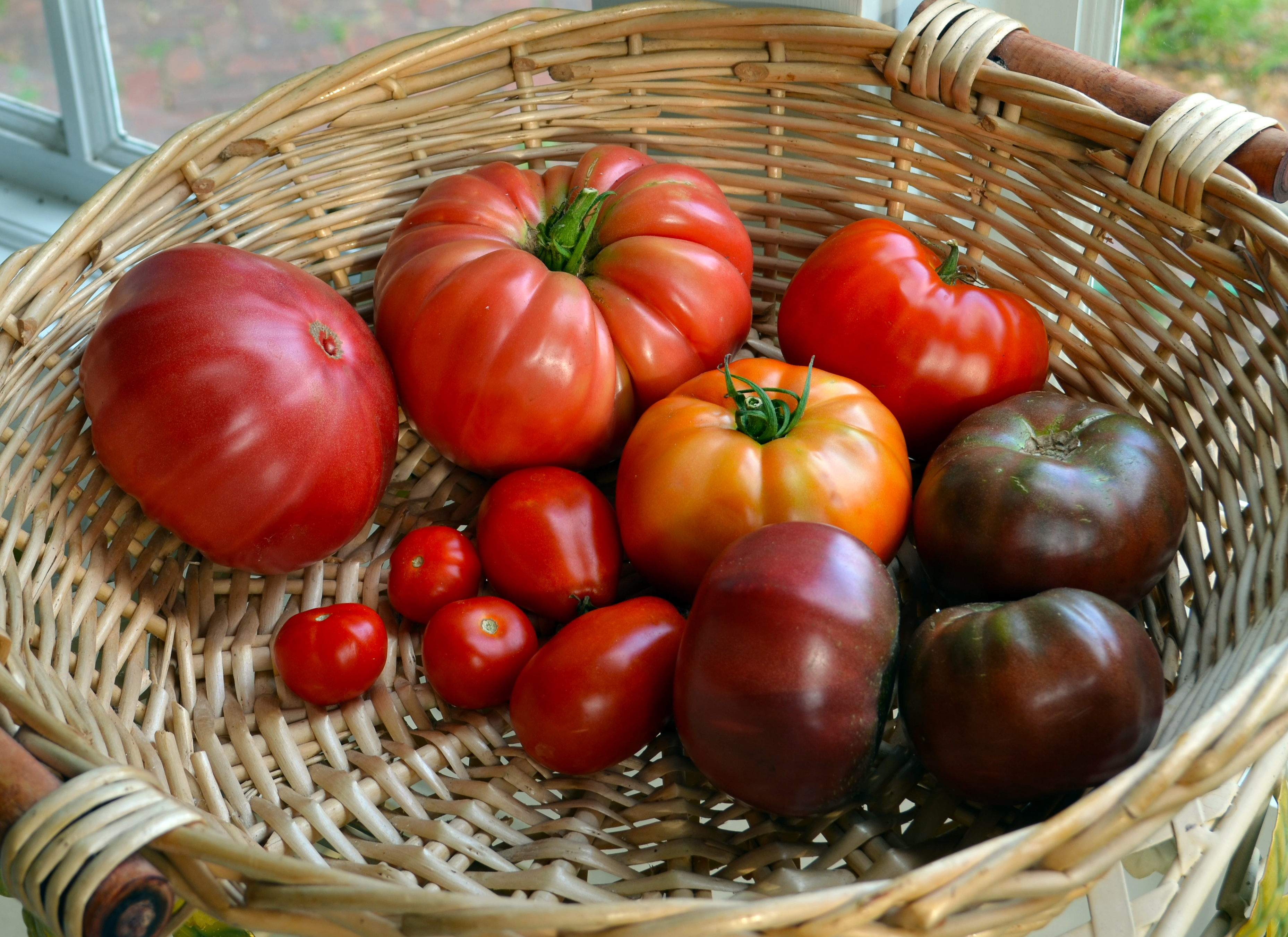
This year’s tomato slate….
(Click picture for full screen)
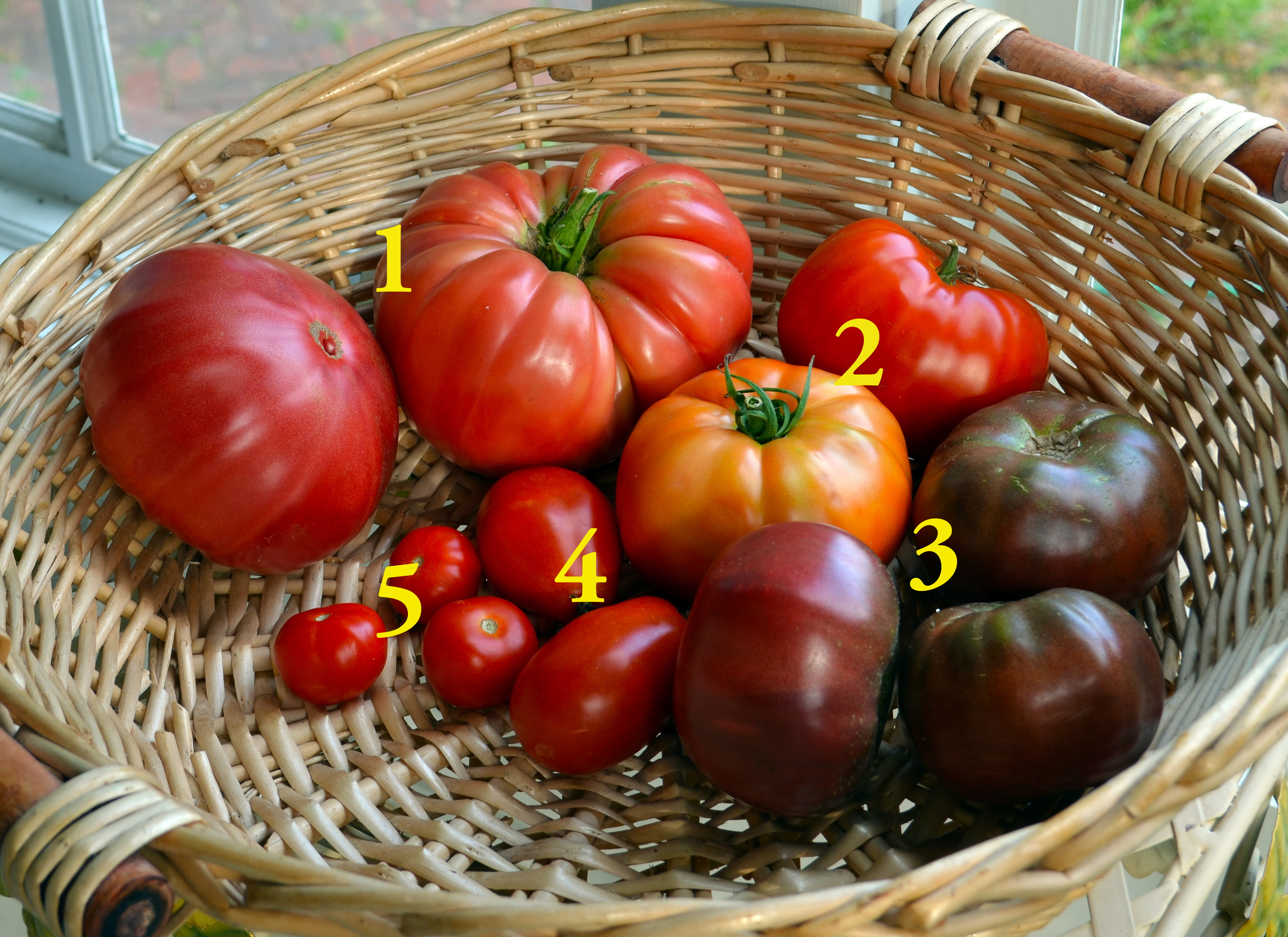
The key at the bottom of the page corresponds to this list.
1. Brandywine, an heirloom beefsteak purported to have been in Burpee’s catalog in the 1880s before disappearing for some years. Returned to circulation when Doris Sudduth Hill of Ohio gave some seeds to Seed Savers Exchange in 1982. Giant leaves shade slow ripening, pinkish fruit that are sometime ridiculously large. Average yield at best but among highest rated in flavor.
2. Rutgers- Developed by Rutgers University for the canning industry in the 1950s. Orange to red color, round with thick pulp as favored for canning. I have these because I was in a jam when the weather stunted off several of my starts this spring and I stumbled across these at a friend’s seed& feed store.
3. Cherokee Purple, an heirloom that was purported to have been given to the ancestors of John green of Eastern Tennessee by the Cherokees in the 1800s. In 1990 Green sent some seeds unsolicited to Craig LeHoullier of Pennsylvania, who was impressed by the true “purple” color of this beefsteak type tomato. The kicker was this one tasted very good too, unlike some others purple types available at the time. The nest year both Southern Exposure Seed Exchange and Seed Savers Exchange offered these and their popularity grew with home gardeners and small market growers. Personally, this is my favorite tomato ever; it is a beautiful color inside and out and maintains an odd green shoulder that camouflages the ripeness of the tomato.
4. Roma VF- High yielding determinate bush variety that was commercially developed in the 1950s in Maryland. Even though it isn’t an heirloom, it is open pollinated and seeds saved from one year to the next are generally true to the parent. A basic pulp tomato, good for soups, sauces and salsa. My experience is each bush will yield anywhere from 80 to 150 tomatoes. Disease resistant, hard to kill, what’s not to like?
5. Tommy Toe heirloom cherry tomato from the Ozark mountains. Prolific, both in yield and self seeding year over year. Plant once, have them for life. 😉 Flavor is terrific for a cherry and is good grilled, sauteed, raw or in juice or sauces or any tomato dish. Eat these warm, straight from the vine when it is 90 degrees outside, you will like them.
No Clever Title

Because this post has no point really.
Actually it has two points, both photo based.
Point 1:
There was a rainbow this evening that, as you can see, I managed to capture it reasonably well for a change. Yay.
Point 2:
I mentioned in one or more previous posts that the vines have filled in just about every inch between beds in the back and then some. While I was out taking rainbow pictures I couldn’t help but notice (from my vantage point perched on a concrete bench) that this garden is now officially in the category of “ridiculous”.
Both of these are clickable for a zoom in if you wish. (The bottom one is stitched together from 3 photos and obviously I flinched from the thunder clap that broke my trance, making for a distorted perspective.)

and…
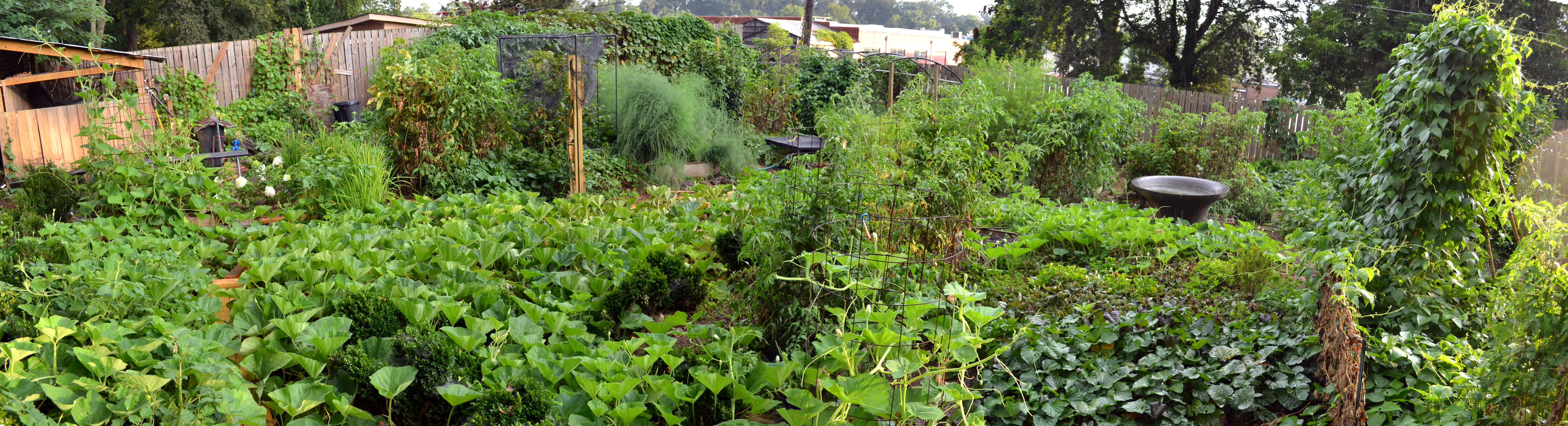
I bet I don’t remember this next year when I “plan” (hahahaha: “plan”….right, I know….) my 2014 summer garden.
August Hatched Some Gourds (Again)
If you’ve followed this silly blog for a while you probably already know that I am afflicted with a modest case of gourd infatuation.
From May through July the vines grow, slowly at first but then seem to double every other day as August approaches. The blooms appear for a few weeks without a gourd setting since initially all of them are male. As august rolls in, so do the female blooms (on the side growth off the main vines) and eventually you spot a gourd or two taking hold.
This year the back fence is overrun with Apple Gourd vines from 4 or 5 vines planted in one small 3×3 bed. Why apple gourds? I just liked the way they looked; they are hard shelled and will dry well as winter sets in…
Three samples follow; typically they are slightly elongated but as you can see one is more spherical. For scale, compare the size of the last one to the brick it rests upon.


The big news this season (big to me of course, but it only garners an eye roll from Mrs cohutt) is that after 3 years of trying I finally got some “bushel basket” gourd seeds to germinate. These are planted between the middle boxwood garden and the back beds. Actually, that’s where they started; now they are over my neighbor’s fence, in the boxwood garden, surrounding the bell and unsuccessfully (for now) trying to get a toe-hold into the blackberry trellis. My hope was that the vines would serve as an effective weed suppressing ground cover with all the new morning sun hitting that back section; they have accomplished this but every other day I have snip their coiled tendrils off of the boxwoods and tomato cages and redirect them in order to avoid being completely overrun.
These are interesting (just ask mrs cohutt -not!) and scattered throughout the mass of vines I continue to discover gourds lurking underneath that are already 8″ to over 1′ on diameter.
A lurker:

Most are pale green and round like this one:

But a few are more pear shaped, like this 4 or 5 day old one:

This fairly large pear shaped one seems to have taken up the camo pattern of the apple gourds:

And finally, twins seem to run in this seed lots’ genetics:

(The Japanese weed tool in between these two is on an 18″ handle.)

I am afraid that Mrs cohutt remains unimpressed, but just wait until she sees the uber-awesome things we can make with these fine gourds, like these gourd lamps on display somewhere in Mexico.
😉
Few Words
The belated harvest season has finally arrived (with a vengeance).

Edamame Judgement
At the urging of my vegetarian daughter, this year I planted some garden soybeans (most of the seed suppliers that I tend to gravitate to usually refer to it as the fancier Japanese name of “soya”).
I opted for “Envy”, which is generally regarded as the fastest seed to harvest, of a moderate to good yield and pleasantly fresh tasting. Johnny’s soy page is here if anyone is interested in some of the choices out there these days.
To backtrack a bit, I don’t recall ever eating any sort of soybean directly before (yeah, I don’t get out much, too busy digging out back I guess). Around here, a lot of farmers do grow soybeans but my best estimate is that they tend to be the Monsanto roundup-ready GMO varieties that become feed for livestock, oil and what not. Only Japanese and trendy metropolitan types would even consider eating this cattle feed, right?
In reality I wasn’t quite that biased or ignorant, I just never stopped to consider that it could be a good small garden crop:
Anything grown in 100+ acre fields = commercial agriculture =needs hundreds of acres and a 70hp diesel tractor to produce, and soy was one of those, therefore nobody would grow it in a garden, right?
So how has the experiment gone so far? Very well actually.
A sample of the bounty in its basic prepared form: A bowl of edamame, boiled for 5-6 minutes, drained and salted:

Part of the original planting; I learned afterwards that (for some reason, ie: the usual brain poot) I planted these at about 1/6th of the density I could have (8 per linear foot is what is recommended).


We’ve eaten quite a bit using the basic edamame formula (5-6 minutes boiled or steamed then served warm in pods with sea salt sprinkled) and it has become quite habit forming. Additionally, I roasted some for a crunchier starter and this was well received by vegan, vegetarian and omnivore family members during our week on the coast.
The kicker though was the edamame hummus Mrs cohutt made this past Saturday. I was told several times that it was delicious (my quick sampling of the mix confirmed this but it was all devoured by mrs cohutt before I could sit down and truly evaluate it 😉 ).
I believe the recipe she used was this one from Two Healthy Kitchens.
The official verdict? Mrs cohutt so emphatically places it at the top of the list for next season that I’ve even planted a second late crop of Envy from seeds harvested from the first wave. (I am pretty sure the ease of shelling vs lima beans has something to do with mrs cohutt’s opinion as well.)
Next year, I think I’ll go with the “Butter Bean” variety listed at Johnny’s though for the purported higher yield and superior better taste vs “Envy”.
And so begins August behind the fence….
Busted on Camera
No additional explanation needed….


 Behind cohutt's fence