Toad Calls
It rained yesterday and the pond has some visitors tonight. One is “determined” while at least one other seems to be responding.
OK guys, get on with it and then go eat some slugs.
(I recorded it with my Blackberry, you might need to turn up the volume a little to catch it. )
Eyes on the Blueberries
Literally.
As in eyeballs.
Sort of creepy eh?
My very own Eye of Sauron , complete with anti-oxidants and fiber.

But there are more:


A few days later the bizarro eyes have faded and we are beginning what appears to be a terrific blueberry harvest.


(This one lasted about 11 seconds past the time this photo was snapped.)

June: Onions, shallots and leeks
As previously reported, the mild winter and warm spring accelerated the garlic harvest by at least 3 weeks vs the last two seasons.
So what about the rest of the alliums?
Next in line will be the two sweet onion types as their tops have flopped are withering. A few days back I harvested several of the smaller ones that by all indication had stopped growing weeks back (it is OK they are still good).
Close to “harvest ready”, not huge bulbs but respectable:
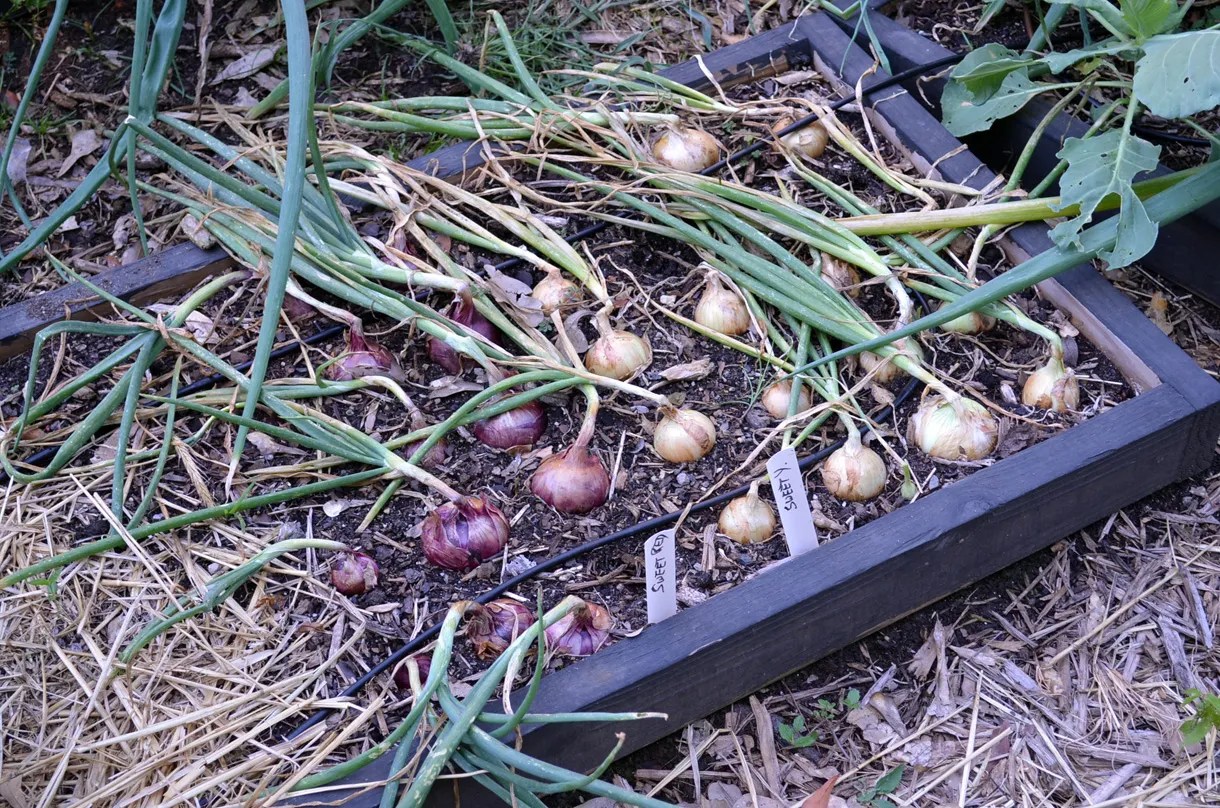
The smaller sweet onions curing on Lizzie’s porch:

The two larger onions in the background are potato (multiplying) onions, not sweet onions. I think some of these will be ready to harvest off and on for a month or so. Funny these two were planted with the others last fall but didn’t divide at all; they just grew right into two of the fattest onions I’ve grown to date. What is supposed to happen is what you can see below; one small bulb sprouts a cluster of bulbs of all sizes:

This type of growth is also typical of shallots; this year’s generation #2 of french red shallots is coming along but is still a ways from harvest as the tops are still vigorous and green. This is good since the bulbs are just beginning to swell noticeably and means that the average size this year will likely be a lot better than last year’s. (This is what is supposed to happen in the 2nd and 3rd generation of alliums when seed stock is saved from the previous year’s harvest). I believe the shallots will be ready about the same time as last year in spite of the warmer winter.

The “regular” or “storage” onions still have quite a ways to go as well as heir tops are still green and strong and bulbing has barely begun. I planted 3 types of these (yellow, white and red) from sets and it appears that the white ones are going to be monstrous (by my modest garden’s standards anyway).
(White ones in the middle)

On the opposite end of the spectrum, the leeks are now in their final beds after their 2nd transplant since sprouting. They were sprouted in a tray of vermiculite then moved into a “window box” type pot on a tight (<1") grid. They grew in this configuration (outside) until tall enough to "dibble in" at least 4 or 5" their final beds.
They've been there for a couple of weeks now and are beginning to show noticeable growth, having gotten over the transplant shock that comes with being handled by ham-fisted gardener.
One of two beds, still covered with my anti-squirrel plastic mesh:

Squirrels don’t like to eat young leeks or anything like that; they just like to come dig in any freshly planted bed and the tiny leeks can’t take this abuse yet.
Closer shot:

Note that these leeks above are very deeply planted at least 4″ at this point; I will likely “hill up” around them a couple inches more towards the end of June in order to extend the white “blanched” part up the stalk bit. Transplanting them deeply a second time gives a nice amount of usable white root without all of the dirt/grit issues that come when plants are (traditionally) hilled deeply once the leaves are developed.
They should be ready for harvest this fall about the time I am planting 2013’s garlic, shallots and potato onions.
That’s the allium assessment as of June 3. Fascinating eh? 😉
Toad Abode
One thing I put in at the time I did the pond was a “hidden in plain sight” toad shelter. In fact, it blends in so well that I sort of forgot about it until the egg discovery a few days ago even though I step on it every day.
Everything I have read about “toad habitat” enhancements suggests installing shade providing/ partially enclosed structure with loose, sandy soil as a floor. The toads crawl in before dawn and bury themselves in the cool sand for a long rest until the next night’s predatory romp.
One structure I put together is comprised of a very large flat stone resting on brick pillars buried at ground level. Three sides have entrances/exits, two face open area and one is an alternate “escape” route into the ferns of the bog garden.
The “secret” Flintstones style toad abode and its northern facing entrance:

And the same @ the east entrance:

So is it being used? It didn’t dawn on me to look until the eggs appeared.
I do believe the answer is “yes”; something has been in and out and stirred around in the sand floor enough to leave some evidence in the doorway:

I realize that this is what is supposed to happen and that it what I hoped would happen, but I’m still amazed when it happens.
Now if the bats would only humor me a little and move in to their super-structure for at least a little while……
Backyard Rice Paddy Update
Things seem to be going well.
The larger lower patty planted with the seedlings a few weeks back is really thriving,
Each plant has begun sending multiple stalks up and overall most are well over a foot high (that is a foot from the soil surface, which is 3-4″ below the water level which is a couple inches below the frame edge).


I seeded the upper section directly and have gotten decent germination (not apparent from the photos, sorry). Oddly, rice seeds pretty much sink right away and don’t seem to need to be water logged first. When they germinate, they start putting out both roots and the primary stalk, but they may or may not stick where they are. Some seem to float around before finding their spot; in the mean time they keep growing. At first I was anxious to secure them when they were loose but it hasn’t really made any difference.
And that’S about all. 😉
Build it and they will come
Ok, so everyone who has been here before knows that a couple of months back I built an amphibian pond sort of on a whim (translation: mrs cohutt didn’t know about it until it was installed. oops).
The idea was to make an interesting and attractive addition to the garden scheme that was functional as well. Functional means providing water for wildlife and increasing the biodiversity in the area, mainly to attract beneficial insect, birds and amphibians.
Bottom line I had slugs and earwigs overtaking the garden and needed some help in the form of toads, the nocturnal rulers of the garden and supremely effective predators, especially for slugs and snails.
We have been experiencing an unusually early and long hot dry stretch here so I figured my pond would be even more attractive to toads should any be in the area. Back on May 19th I sent a text inside to mrs cohutt @ dusk saying saying that I was pretty sure I heard toads courting from a distance, one to the north and one to the south of my property.
But alas, not a bit of action in the pond (the baby tree frogs were the result of tadpoles rescued from a friend’s pool cover) and I hadn’t heard the toads “bleating” again since then. I have a neon “open” sign flashing over my perfect pond and nearby “toad houses”, so I wonder: Are the local toads just as illiterate as the average local homo sapien?
So last Tuesday night we had a 30 minute storm around 10:30 that dumped about an inch of much needed rain on us. Wednesday morning I went out to pick some berries for breakfast and did a quick walk through of the rest of the garden and was stunned to see this in the pond:


Hallelujah.
These are definitely toad egg strings, as most other amphibians that would be in this area have eggs that clump into large masses (these pictures don’t show the strings very well but they are there.
When I was confirming the eggs’ ID I also discovered that toads typically only breed the nights after decent rains.
Well duh.
It makes sense that they are hardwired for this since it improves the chances of water being around long enough for the eggs to go full cycle into frogs. The “dry pond” egg layers have long ago been thinned out of the gene pool.
So the two courting toads probably converged on my property on the night I heard them or shortly thereafter and were just waiting for nature’s signal to “get it on”. Wednesday evening after dark they were calling to each other again in very short bleats, so they are still here. And since a female toad can lay hundreds of thousands of eggs in a season (May – August here), I’ll probably be seeing a LOT more eggs in the future.
And a lot less slugs.
Go team!
Tiny Pollinators
In two of the front beds, I have let the biennial flat leaf Italian parsley bolt in order to allow it to “own” these sections by naturally reseeding.
From a distance, the flowers are rather boring and appear to remain green (ie never fully developing blooms.
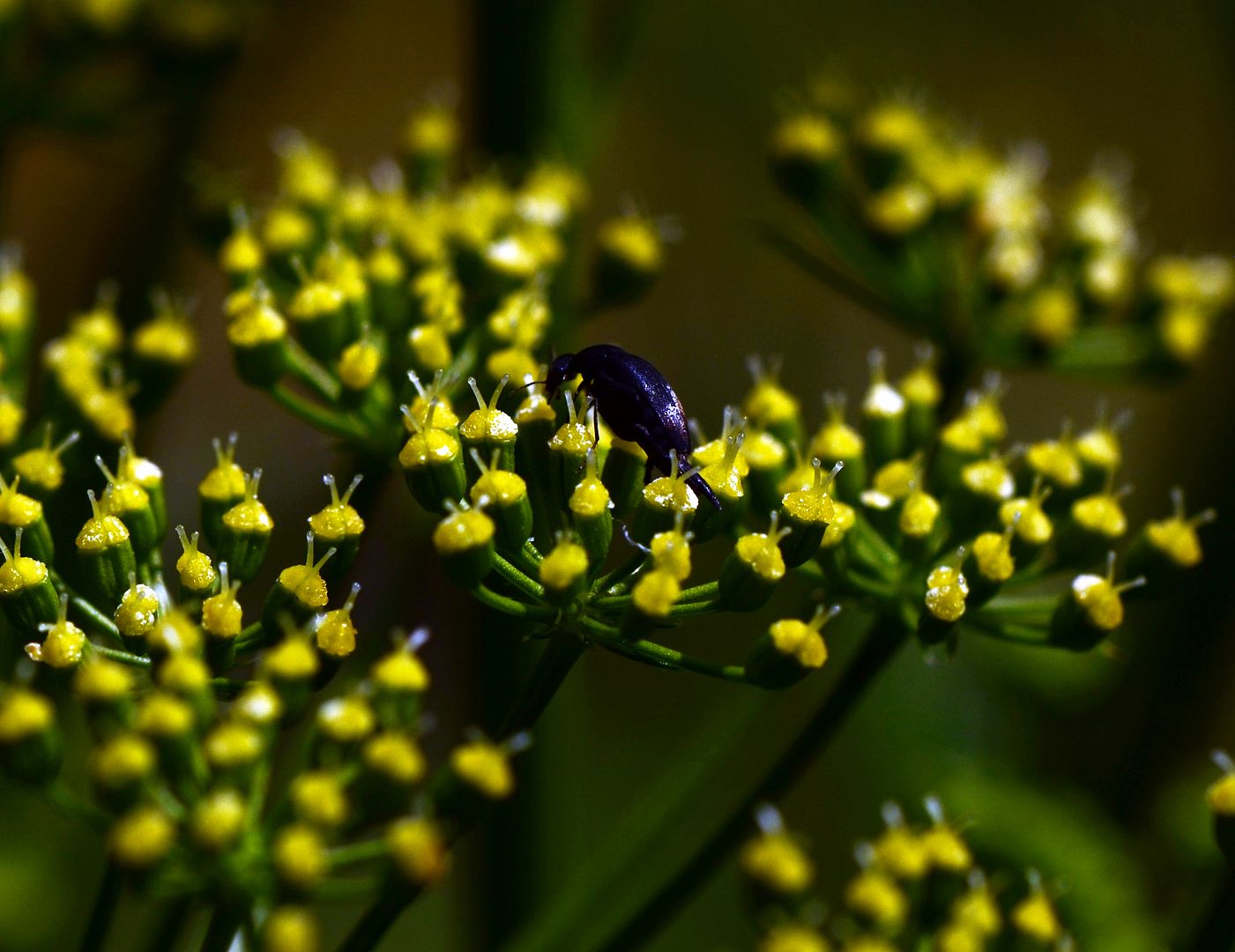
Yesterday I inspected these a little closer and noticed a lot of activity on practically every other flower. The largest insects I spotted was perhaps 1/2″ long, tiny wasps busily collecting pollen from the tiny individual flowers.
I managed to capture a few acceptable close ups of these even though the flowers were swaying in and out of focus in the breeze. For each picture I have included a wider angle shot as well as a click-able thumbnail to a closer view of the same scene.
By all means please click to look at the closeups; pollen looks pretty tasty on a grain by grain basis- sort of like a micro version of sugar on top of sweet lemon square deserts.
The largest of the group, the tiny 1/2″ wasp…..

Click for close up:
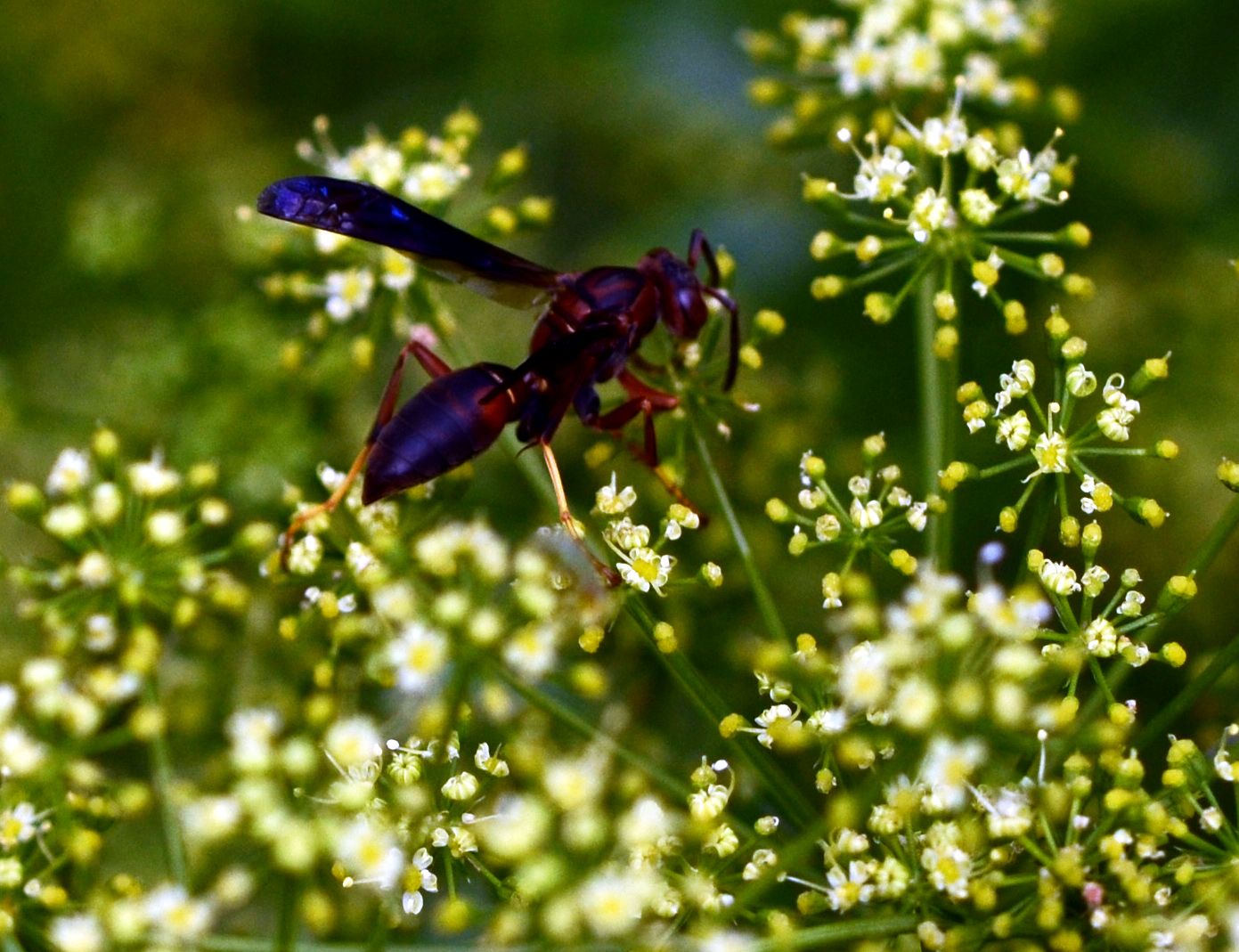
Top view:

Click for close up:
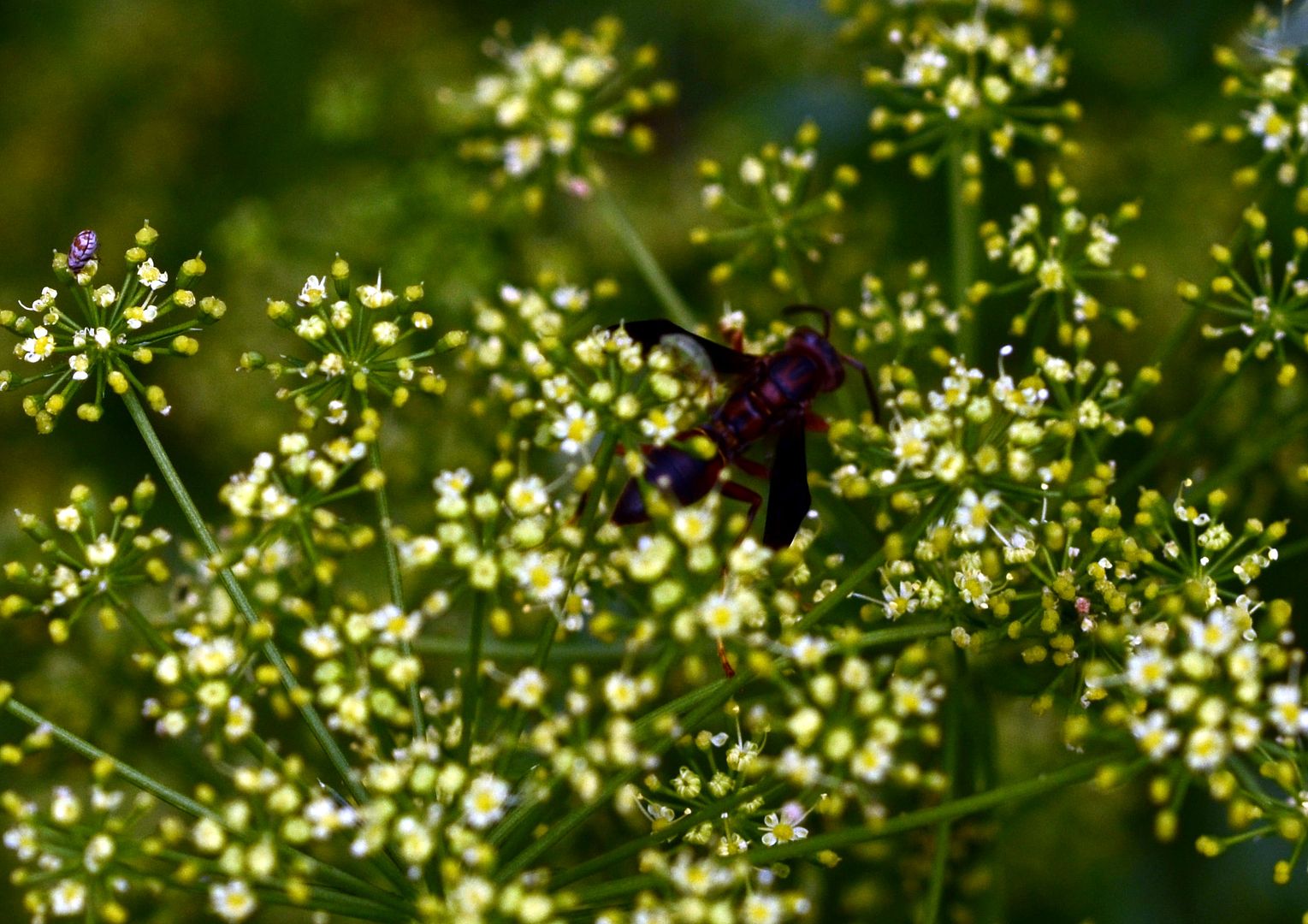
And the smallest…..
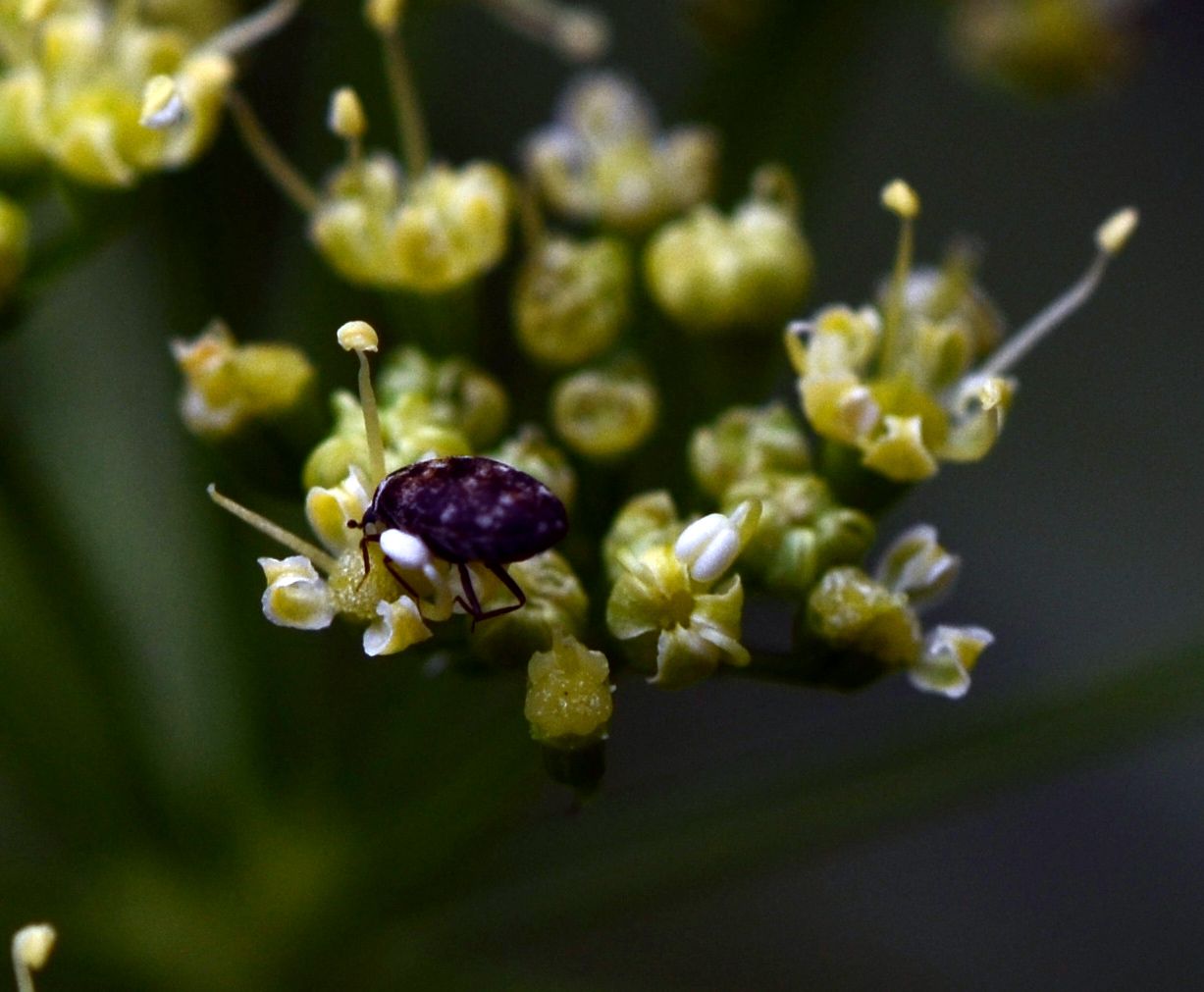
In the picture above you might have noticed the tiny insect in the upper left corner- a flea beetle looking fellow. Or you might not have, they are perhaps 3/16- 1/8″ long:

Still no? try this:
And the in between……
There were hundreds of these little guys on each plant but they were so harried in their pollen collection that it was difficult to catch one in focus. These are about 1/4 inch long.

Click for close up:
Thai Shrimp & Cabbage
The cohutt household had never eaten much cabbage in the first 25 or so years of our existence; perhaps we purchased a head or two to make slaw and I seem to recall a warm cabbage dish of some sort being served along the way, but cabbage has definitely NOT been a staple around here.
A couple years ago I decided to a few heads; my 2nd summer season of 0bsessive bed building/vegetable growing was winding down and I decided to expand my winter gardening experiments.
Well there is nothing like freshly grown (fill in the blank) from your own back yard as motivation to learn new recipes for new foods (“I grew this so by god we are going to find some way to prepare it that won’t make us gag” syndrome).
Oddly, we immediately decided that we really liked fresh cabbage, experimenting with it braised, sauteed, in soups, and in slaw and stir fry concoctions. Funny how this works.
Last winter I was browsing recipes and came across this one:
Thai Shrimp & Cabbage
The basic ingredients are listed on the linked page, although I have never measured anything in the 3-4 times I have prepared this so far and (as usual) substitute some items for convenience and by preference/whim. My ingredients end up more like this for 2 1/2 -3 hearty servings:
2-4 cups shredded cabbage
2-3 tablespoons oil (use 2/3 of it with the cabbage and the rest with the shrimp), I have used both corn and olive oil, basically what was in my pantry (no canola here.)
several very thinly sliced rings out of an onion, more if using a sweet onion, less if not.
1 or more garlic cloves, depending on type and availability, chopped
1 lb of flash frozen shrimp uncooked, peeled and de-veined. large is better than small imho but not super jumbo etc.
4-6 tablespoons water
1-2 tablespoons soy sauce
1-2 tablespoons minced fresh cilantro
1/2-1 teaspoon hot Asian style chili oil/flakes
How to prepare it:
1. Chop the cabbage, stir fry in roughly 2/3 of the oil for less than 5 minutes. You want it to have changed to the brighter color of green but still retain some “crunch”. Set it aside (keep warm).
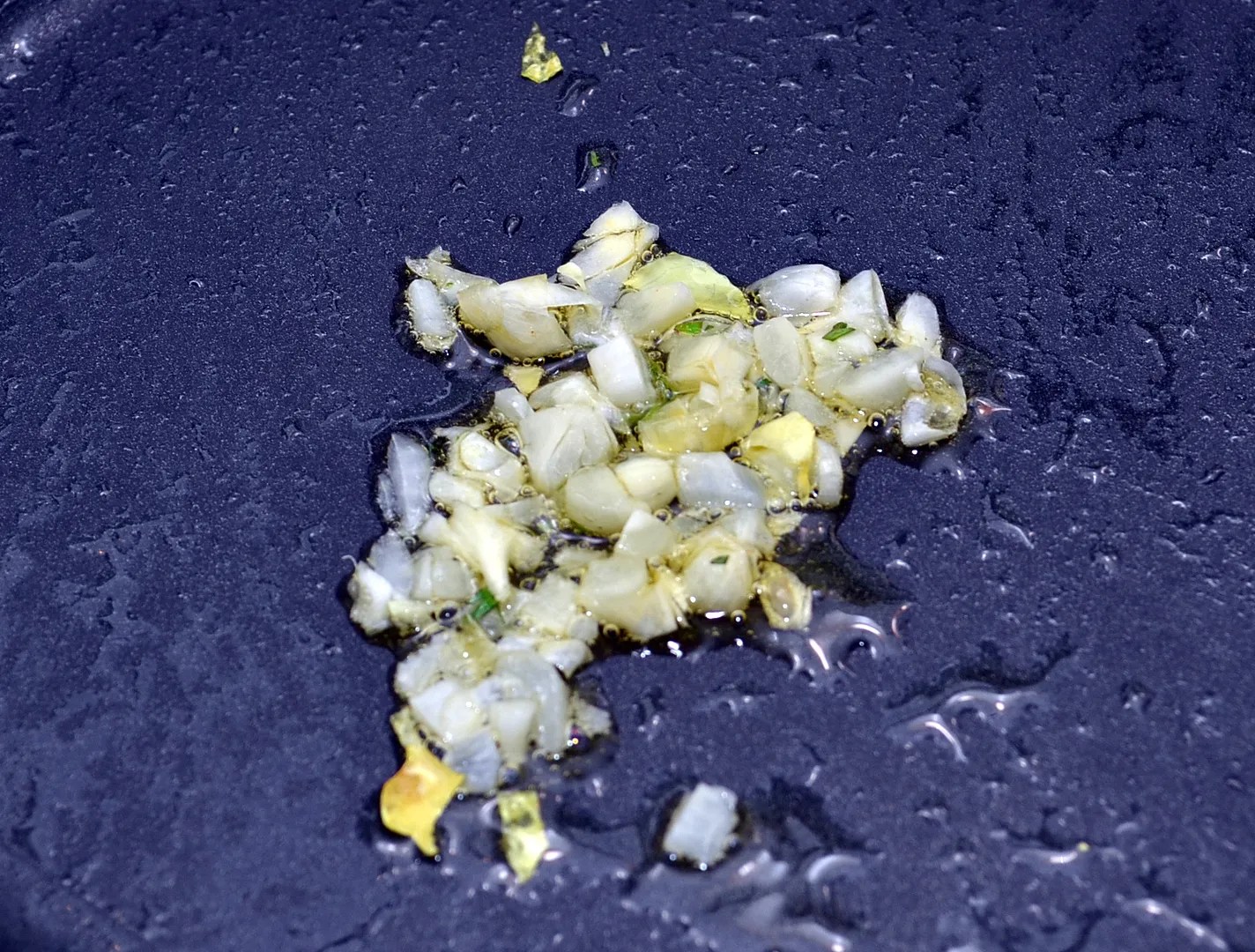
2. Add the remaining oil to the same skillet and over low heat add the onion and garlic; don’t scorch or overcook it, just let it go somewhat translucent, releasing that terrific aroma.
3. Add a little water and turn up the heat to medium/high. In a minute when the water start to “boil”, add the rest along with the soy and shrimp and stir fry quickly for 2-4 minutes. (While the shrimp is in the pan, prepare individual servings of the warm cabbage in bowls.)
4. When the shrimp turns pink, quickly stir in the chopped cilantro and pepper oil/flakes.
Serve immediately over the cabbage.
What is looks like:
Ingredients ready; Note I subbed a small immature head of spring or “green” garlic (all of it) and a small sweet onion:

Monster Kitteh heard shrimp was on the menu:

Kitten was correct:

Cabbage is done quickly, note color vs the top picture:

Chopped garlic (not smashed or minced)
Sweat the sweet onion on top of the garlic for a couple minutes

Shrimp, water & soy into the pan:

Oil and cilantro ready:

“Pink” shrimp is ready, immediately after adding the cilantro and pepper oil

Thai Shrimp & Cabbage served:

Silly Arsed Backyard Birds
The pair of doves, one of which was a “gimp” with only one good foot. Regardless, he was a good hopper and apparently still got the girl. (They visited to eat the seeds from the rogue wheat that sprouted last winter from the straw bales.)

The disbelieving Robin, wondering why kept taking pictures as he dried his feathers after a dip in the frog pond.


And the red dandelion, aka the fluffiest Cardinal in the county doing the same thing, drying feathers after a bath (the doves don’t seem to mind him lurking):
 >
>

That’s all for today.

 Behind cohutt's fence